
Can you hang a TV on a drywall wall? Support, brackets and cost
A homeowner's guide to TV mounting on plasterboard: identify backing and studs, assess an articulated bracket, plan cables and understand TV-wall prices.
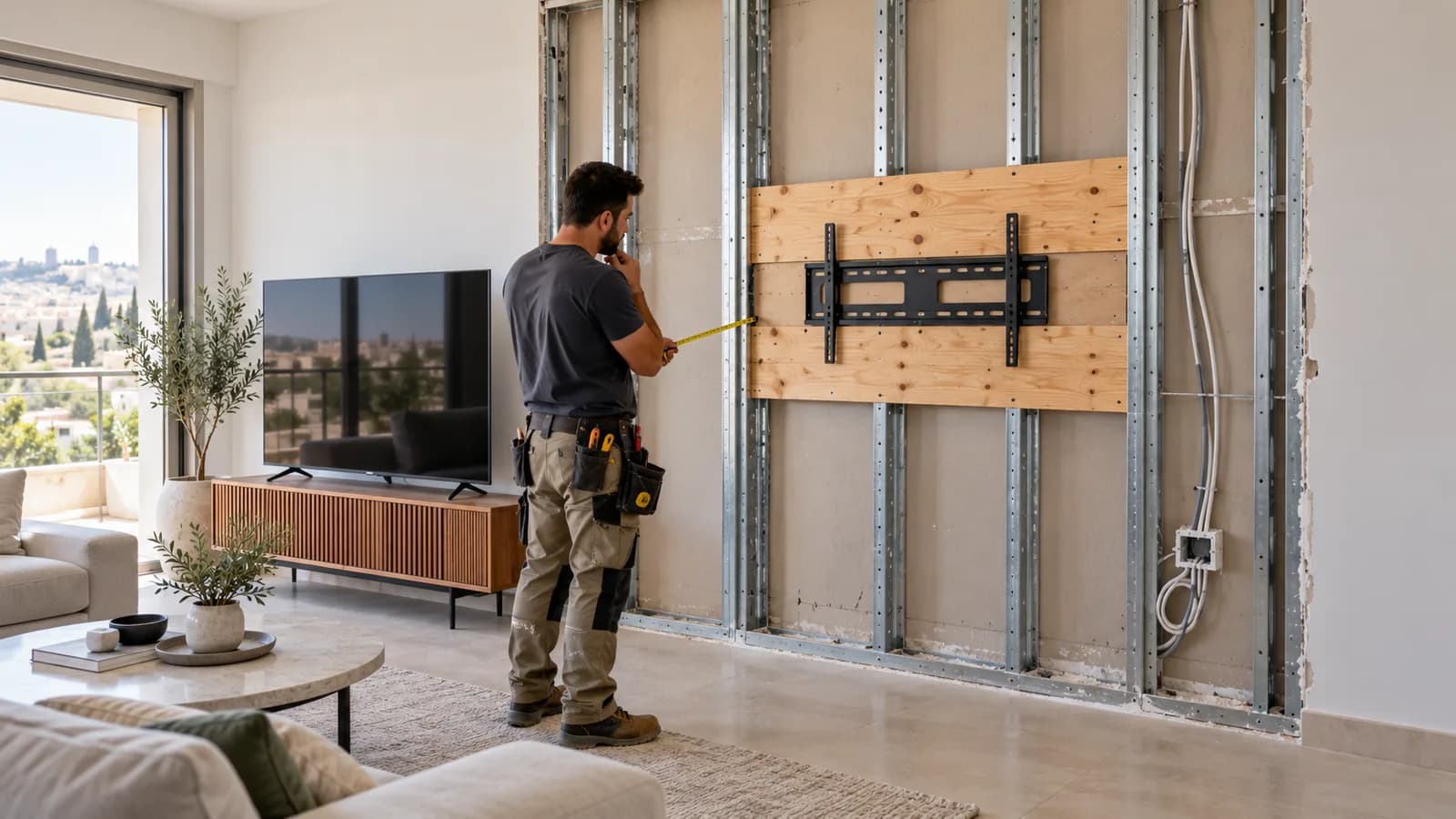
A television can be mounted on a plasterboard wall when the load is carried by an appropriate, verified support and the bracket suits both the screen and the wall assembly. There is no reliable universal answer such as “any drywall anchor holds this many kilograms.” Behind the sheet there may be metal framing, masonry, concrete, purpose-built backing or an empty cavity. An extending arm also changes the forces compared with a flat bracket. The first task, before drilling, is to identify the actual construction. This guide covers both a new TV feature wall and an existing partition in an Israeli apartment, including cable planning and realistic price references. When the framing and substrate are unknown, a qualified installer needs to assess the fixing scheme on site.
1. Find out what sits behind the sheet
Ask the owner or original contractor for framing drawings and photographs taken before boarding. Confirm the number of board layers, wall depth, substrate, stud positions and any backing. A framed plasterboard partition and a thin lining over concrete present very different fixing choices. Tapping and a domestic detector can suggest a stud location, but cannot prove its load path or reveal every cable. Without records, ask the installer to inspect the assembly by a suitable safe method and document the proposed fixing points. Do not drill randomly beside outlets, air-conditioning routes or an assumed backing location. An accurate description of the wall comes before a hardware purchase.
2. Count the television and bracket together
Write down the screen model and mass, the bracket's own mass, and how far it extends from the wall. A fixed flat plate and a long articulated arm apply different forces; extending and moving the display increases leverage. The rating printed for one anchor is not the capacity of an entire wall. Follow the television, bracket, fastener and wall-system documentation. Allow for ordinary use, including someone inadvertently touching the screen while cleaning. If the proposed fixing cannot be justified for that construction, choose another wall, use a freestanding unit or design reinforcement. A universal kilograms-per-sheet figure is an unsafe shortcut.
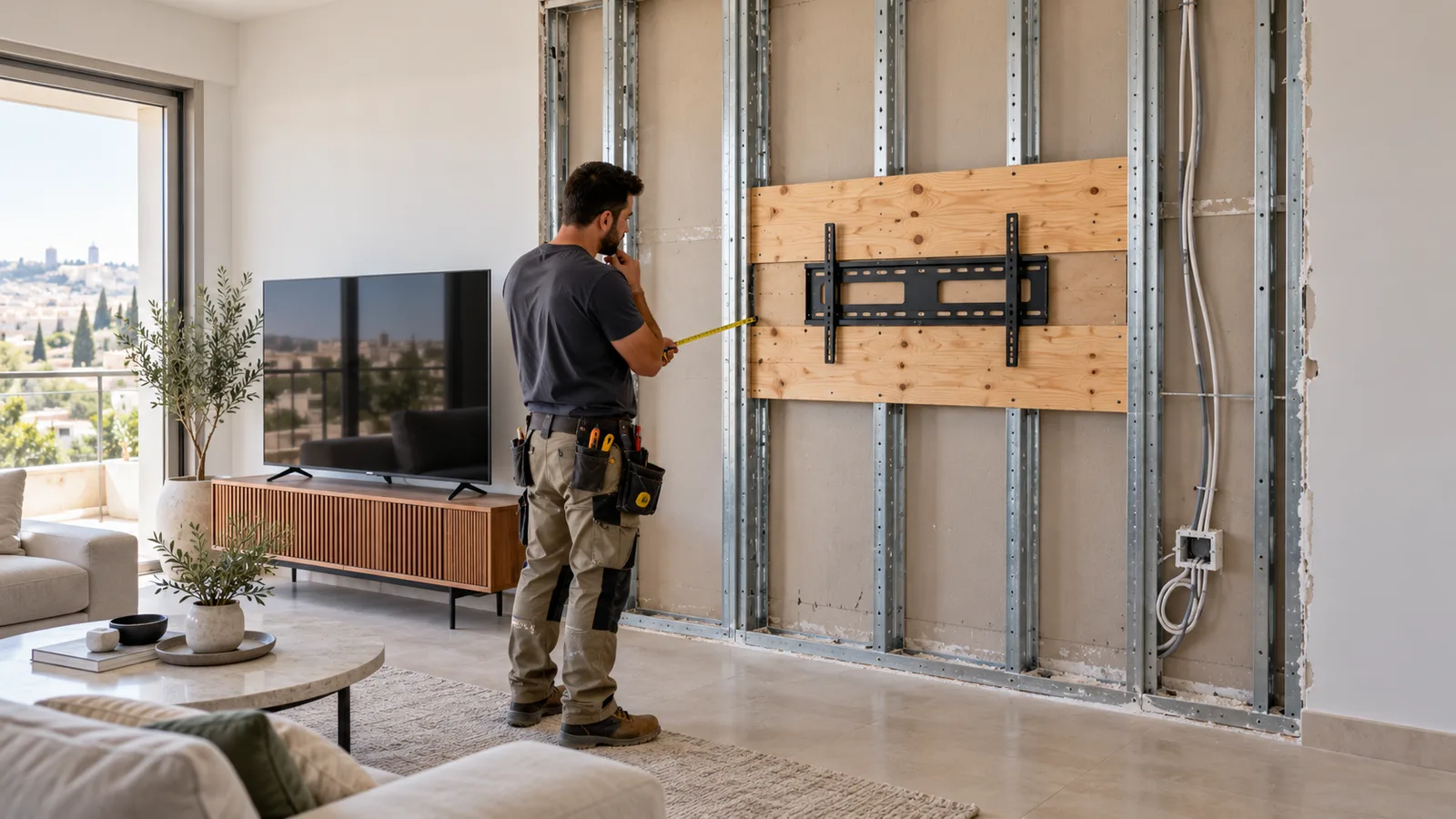
3. Plan backing before a new wall is closed
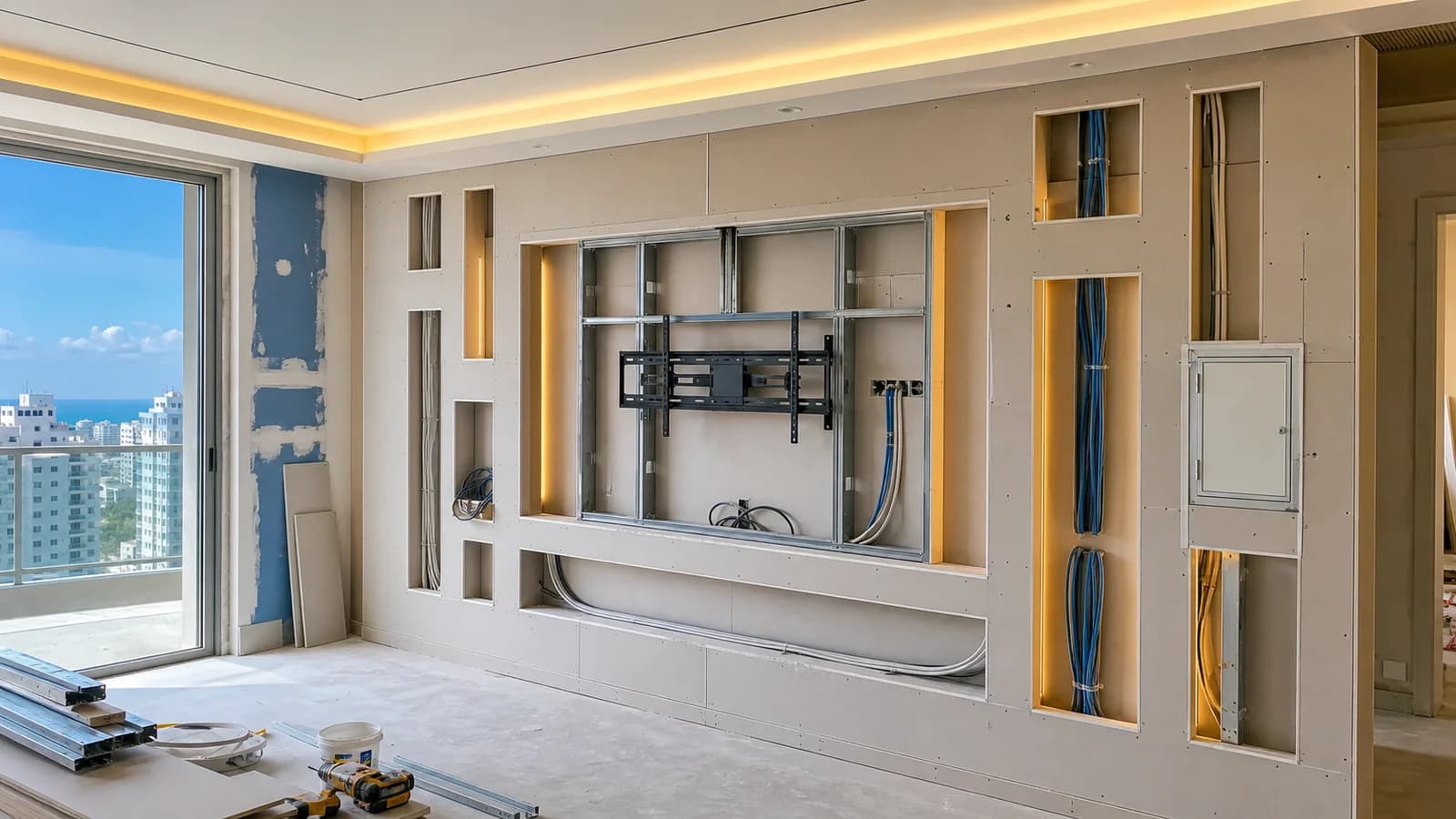
On a new build, mark the screen centre height and the full area where the bracket holes could land. The installer can provide suitable backing tied into supporting members for the planned assembly and load. Photograph it with a tape measure before boarding, and save distances from the floor and a corner. At installation, compare the real bracket template with the reinforcement: holes outside the backed zone defeat its purpose. System manufacturer USG discusses additional reinforcement for screens and other wall-mounted items. Backing is useful only if both its position and its connection to the structure are known.
4. Do not guess inside a finished wall
Start with any construction photograph or plan. If none exists, a qualified installer should check the studs, substrate and feasible reinforcement options. Sometimes a verified structural element offers a fixing point; in other cases a local opening, new backing, board repair and repaint are required. A large display or extending arm makes this assessment more important. Do not hide unsuccessful drill holes with filler before the intended fixing area has been reviewed. If there is concrete behind a lining, the fixing may need to reach it, but anchor type, length and stand-off depend on the specific build-up. An online video cannot identify your hidden wall.
5. Position the screen for actual use
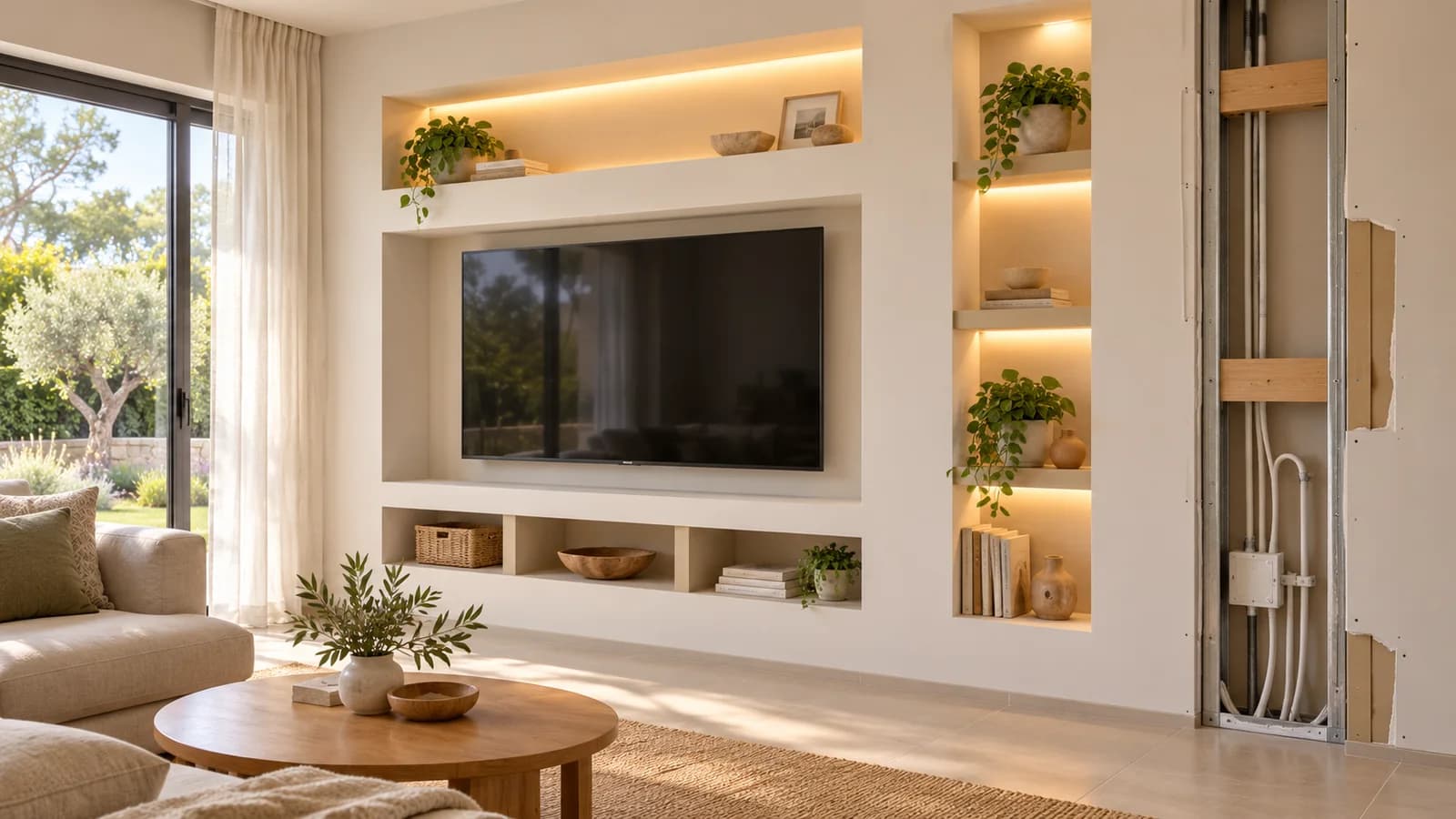
Make a paper template or have two people safely hold the screen at the proposed height before drilling. Check viewing from the sofa and dining area, reflections, cabinet doors, walking clearance, soundbar position and access to ports. Measure the gap to outlets and the intended cable exit. A TV can be centred beautifully in a niche yet be tiring to watch because it sits too high, while an extending bracket may collide with a shelf. The TV walls and niches guide helps coordinate geometry, lighting and equipment ventilation while the framing can still change. Practical use should determine the final mark.
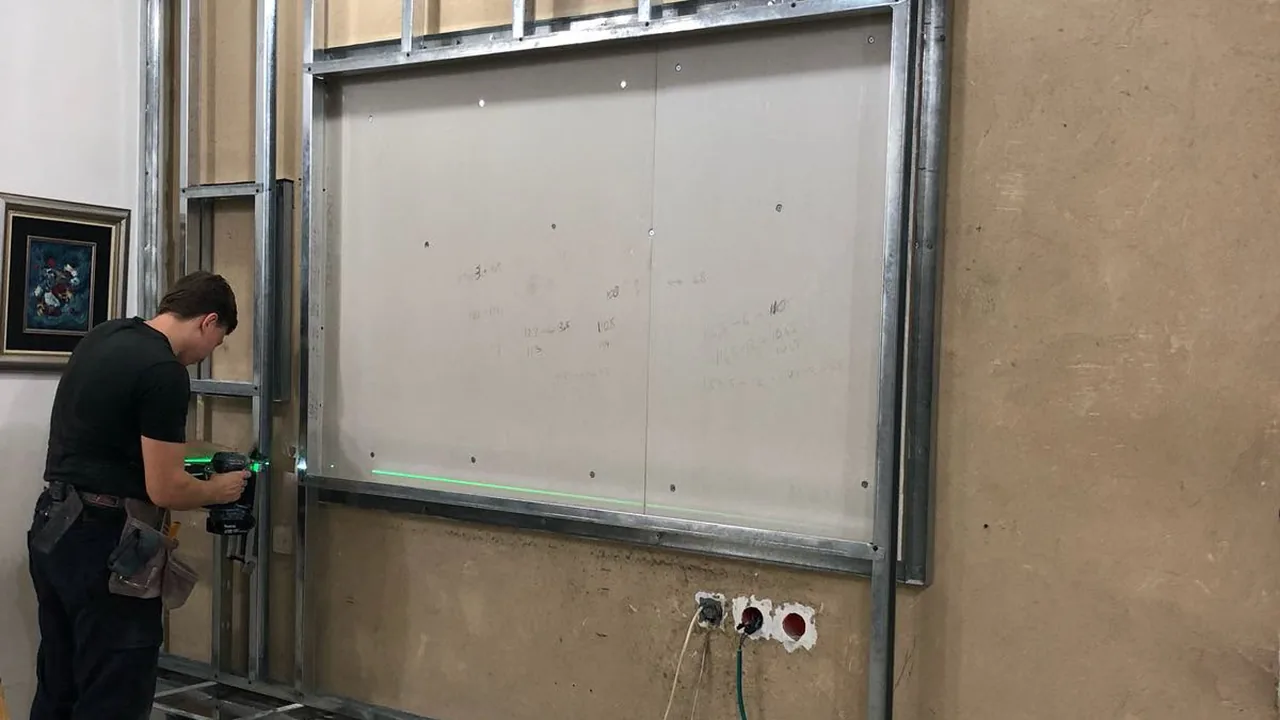
6. Plan electrical work and cables separately
A power outlet behind the television needs appropriate access, while fixed wiring and low-voltage routes should be designed before the frame is closed. Do not conceal an ordinary extension lead or loose mains cord in the wall cavity as a substitute for a proper installation. An appropriately qualified electrician should handle outlet relocation and electrical connections. Allow for HDMI, network and soundbar routes and a way to replace cables later. Avoid making a rigid niche that fits today's television with no allowance for a future model. Keep photographs of cable paths so later drilling and maintenance are safer. A sleek wall should remain serviceable.
7. Be wary of simple anchor promises
A cavity anchor can suit some loads and systems, but there is no universal statement about how much “drywall” will hold. Board type, condition and layers, fastener spacing, distance from an edge, supporting frame and direction of force all matter. An articulated arm increases leverage. Do not treat a laboratory rating for one fastener as a rating for a whole television wall. Ask the installer what the bracket fixes into and how the load reaches the structure. If the entire explanation is the brand of a hollow-wall anchor, ask for a wall-specific fixing plan or consider a different installation method.
8. Price the complete scope, not just the screws
As of 18 October 2026, the NikoGips price list shows an indicative ₪1,800–3,840 per unit for constructing a new plasterboard TV wall. That is the price category for a feature wall, not a fee for merely hanging a television on an existing surface. A decorative niche appears separately at ₪780–2,160 per unit if it is a distinct part of the project. Opening an existing wall, installing backing, electrical work, finishing and mounting the bracket need a site-specific quote. The calculator provides an initial range for construction work. Ask for separate lines for fixing, cabling, painting and VAT treatment.
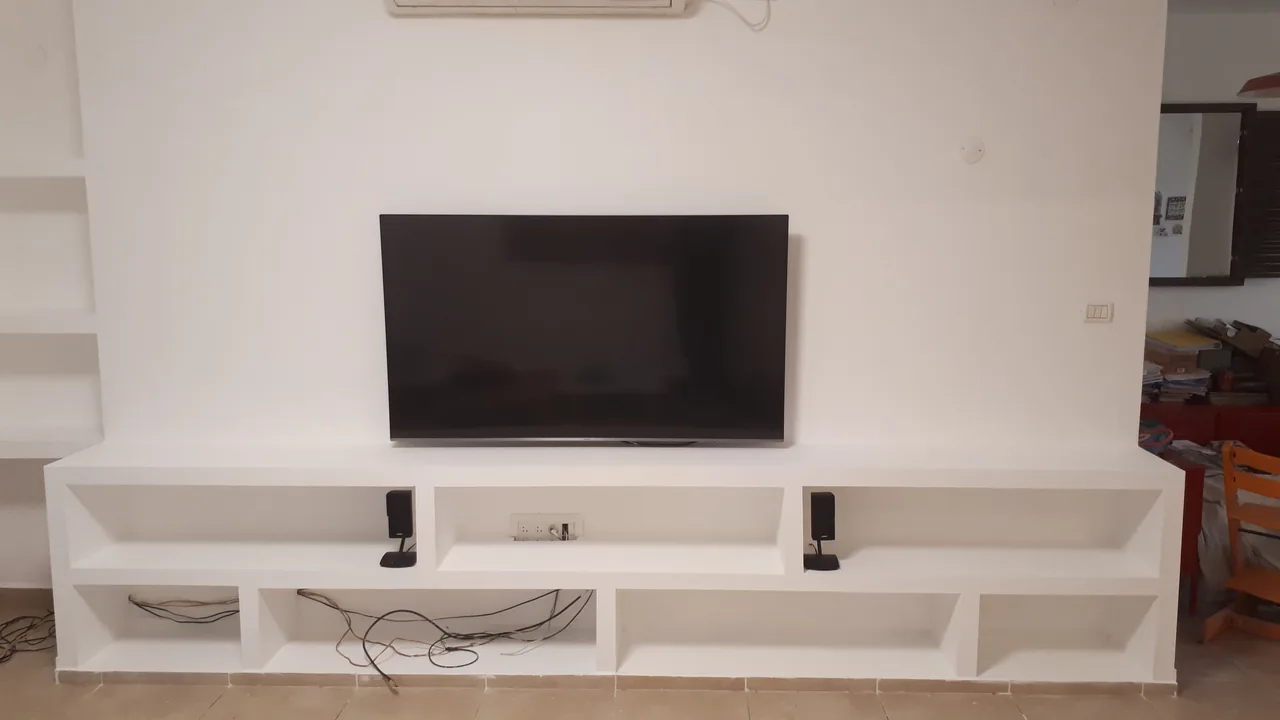
9. Compare the practical alternatives
If the wall is still open, planning backing and cable routes during framing generally avoids reopening the paintwork later. In a completed apartment, compare three routes: a verified strong fixing location, local reinforcement with surface restoration, or a suitable freestanding TV unit. Consider service access, visible wires, future screen replacement and the risk of damaging finished surfaces alongside the first visit's price. A worked Binyamina TV-wall example shows how cabling affects a project estimate, but it is not a tariff for every address. The best option depends on the actual hidden support.
10. Accept the installation by checking the detail
Before closing a new wall, photograph backing and cable paths. After mounting, check that the screen is level, its ports remain reachable and the bracket moves smoothly without creaking or visible wall flex. Do not proof-test it with extra weight or a sudden pull. Keep the bracket manual and a record of the fixings used. If cracks appear around the points, the board moves or the screen changes position, stop moving it and call the installer to inspect the support. Cosmetic compound is not a substitute for fixing the load path. A record of the concealed assembly helps the next owner replace the equipment safely.
Upper kitchen cabinets need their own load and blocking plan; see the cabinet mounting guide.
Questions
Can a TV be fixed directly to plasterboard?
The full assembly determines the fixing; a heavy or extending screen needs verified support.
How many kilograms can drywall hold?
There is no universal number: assembly, frame, hardware and bracket leverage all matter.
What is TV backing?
Reinforcement planned in advance and connected to supporting wall members.
Can a finished wall still be reinforced?
Yes, though local opening, new support and surface restoration may be needed.
Is an articulated bracket more demanding?
Yes. The screen's extension increases forces on the wall assembly.
Can I hide an extension cord in the cavity?
No; plan fixed wiring and access with the appropriate electrician.
What does a TV wall cost?
The catalog lists a new TV feature wall at ₪1,800–3,840 per unit; mounting alone needs a separate quote.
How can I find existing backing?
Use construction photos and a plan; otherwise have an installer inspect on site.
What if the bracket feels loose?
Stop moving the screen and arrange an inspection of its support.
What should I photograph before boarding?
Backing, framing, cable routes and distances from the floor and corners.
Relevant services
Guides and practical notes
Message Nikolai on WhatsApp with photos and dimensions, or call him to discuss the next step and what is needed for an estimate.