
Durable drywall in a Harish apartment corridor: protect the places that get hit
How to plan a narrow hallway for furniture, strollers and door handles without relying on paint alone for impact resistance.

A corridor sees bags, strollers, furniture and door handles every day. Drywall can work well there when its frame, board, exposed corners and mounted storage are planned for the actual route. Simply adding a random extra sheet may use precious width without protecting the damaged point. This guide helps a Harish homeowner choose between a targeted repair and a new lining, and ask for a quote that reflects the real details.
1. Map the movement route
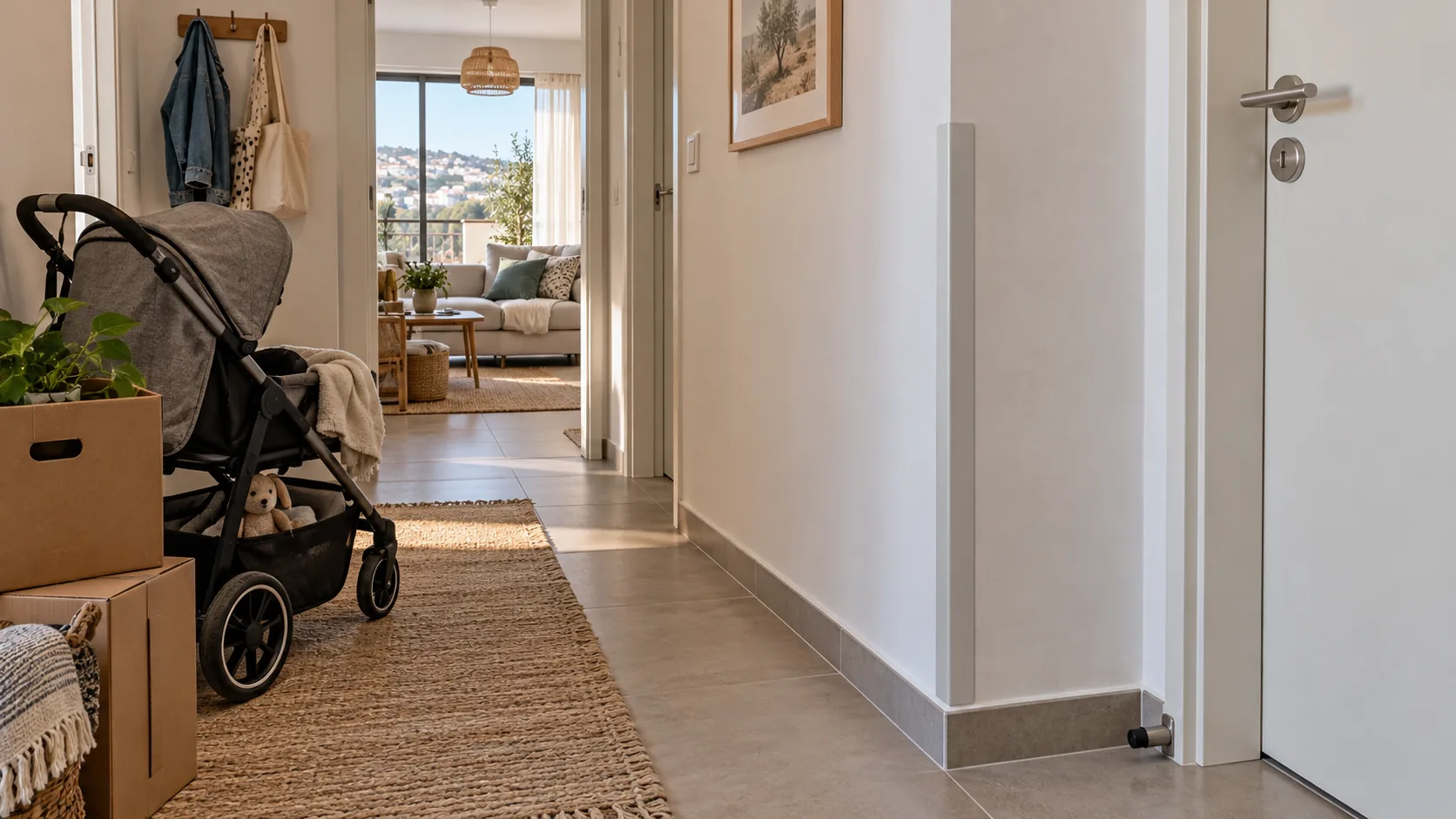
Measure clear corridor width and door openings. Mark projecting corners, handle strikes, stroller parking and the path of large furniture. Damage often repeats in a few spots; a whole apartment does not automatically need the same protection. Mark the proposed lining at full thickness and walk the route again. Skirting, cupboards and new board all reduce usable space.
2. Name the kind of damage
A surface scuff, crushed corner and punctured board need different remedies. Washable paint helps dirt but does not strengthen an empty cavity. A corner profile protects an edge yet will not prevent a blow to the middle of a sheet. Gypsum Association guidance distinguishes boards designed for impact; check the specific product available locally rather than relying on a vague tough-board label.
3. Inspect frame and base
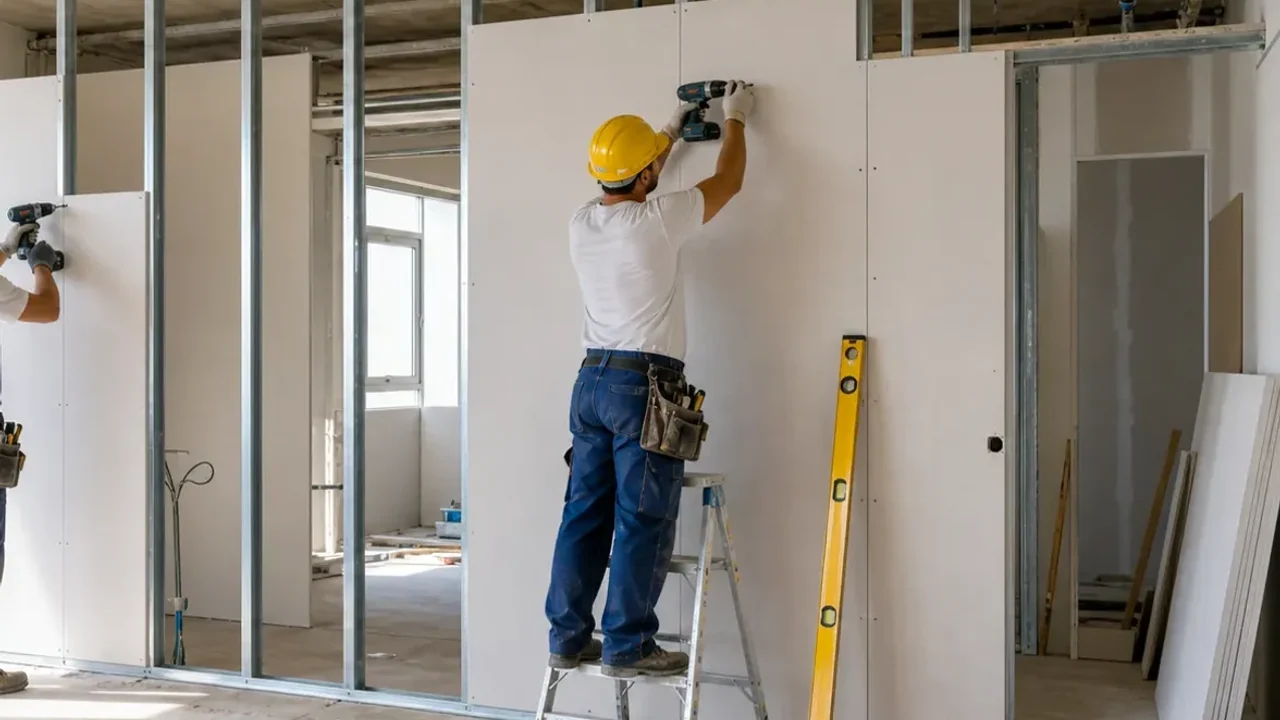
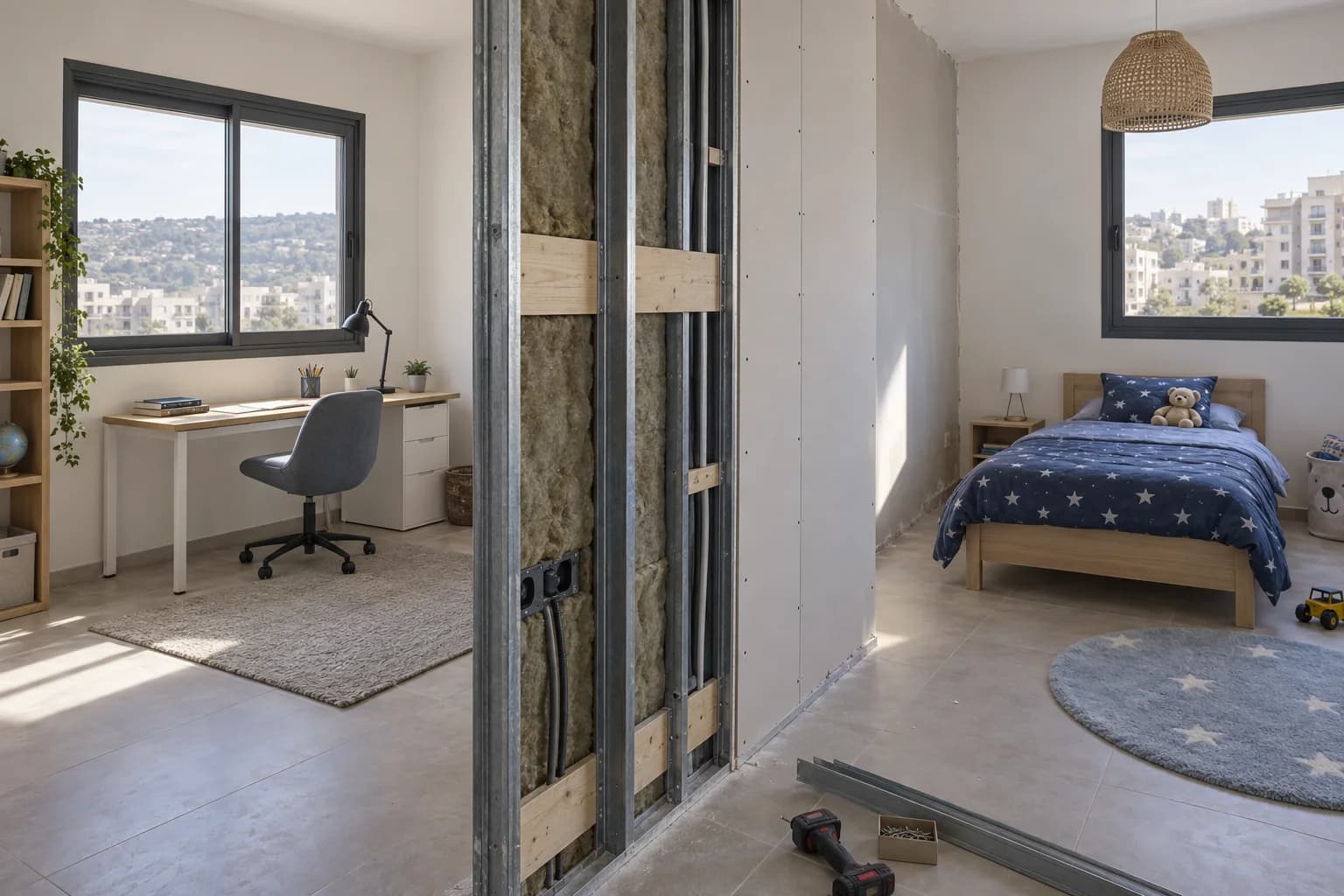
The frame spacing, anchoring and existing movement matter more than a decorative topcoat. If old lining flexes, simply painting or filling it will not solve repeated cracks. Inspect edges beside doors and heavy cupboards. Compare repair with new drywall cladding in Harish, including how much corridor width each option takes.
4. Give external corners a real detail
A projecting corner at a turn is often the first contact point for furniture. Proper corner reinforcement, sound joint work and sensible geometry reduce chipping. A frequent heavy strike may call for a further guard or a change to the route. If a door handle hits the wall, a correctly placed stop can be more useful than a thicker board. Name who supplies and fits the stop.
5. Plan hooks and cupboards before boarding
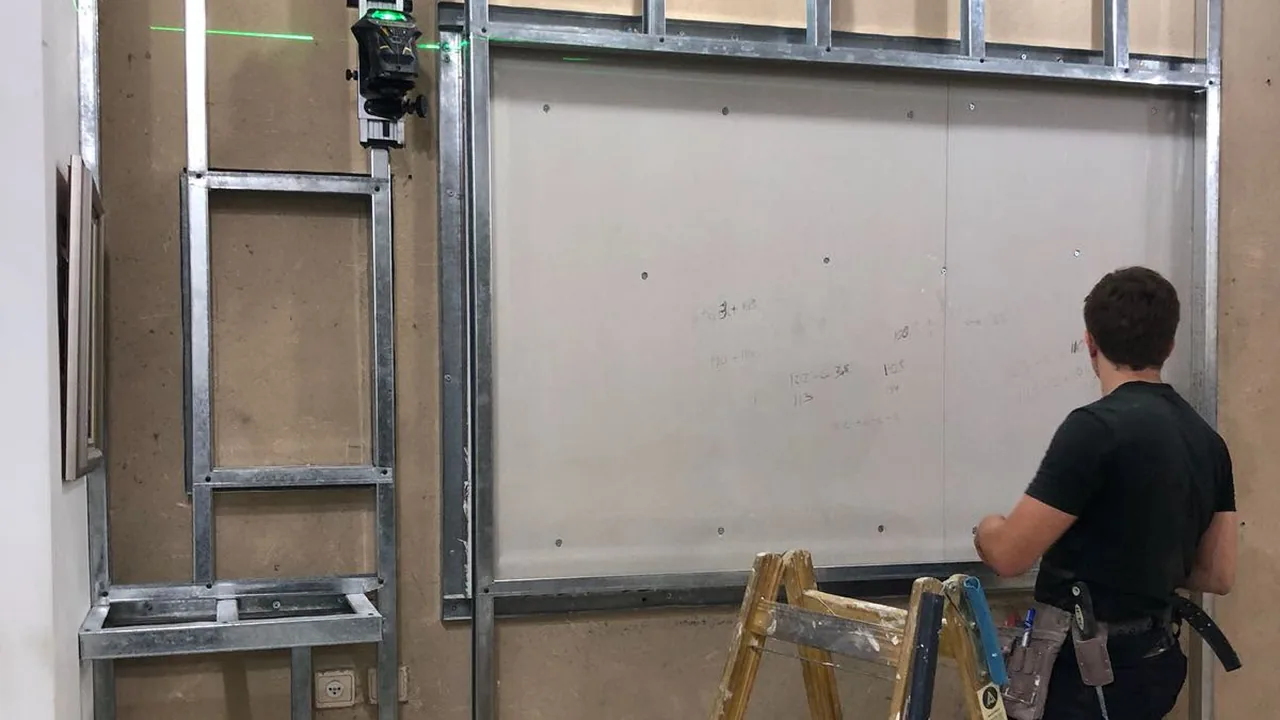
Mark mirrors, coat hooks, shelves and tall storage, including expected load. Agree backing and fixing zones before the board closes. A universal hollow-wall anchor is not a design for every cupboard. Photograph backing with a tape or a fixed corner reference and pass the record to the furniture installer. Concealed electrical routes are identified by the relevant specialist.
6. Choose a finish that can be maintained
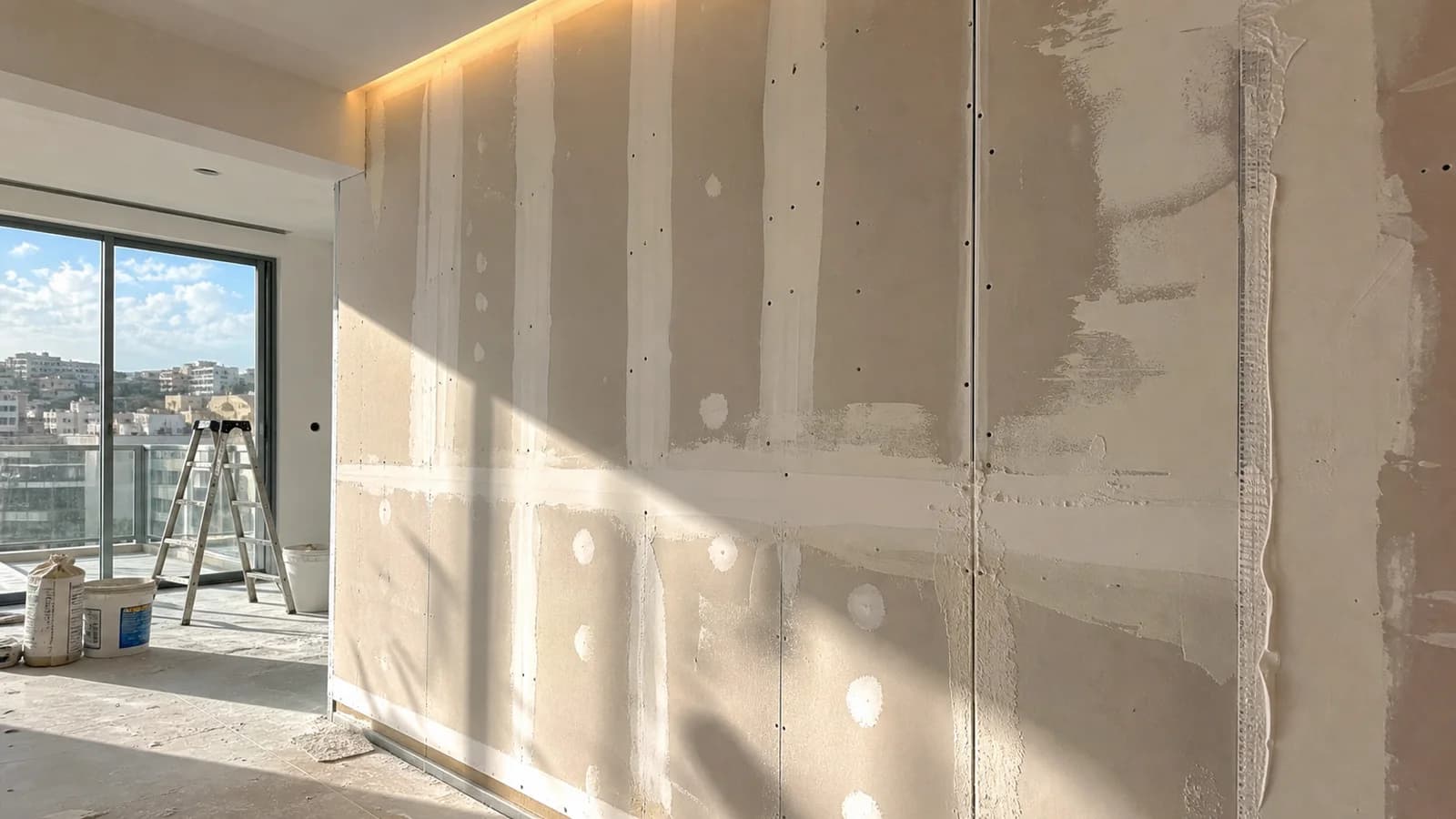
Hallway walls collect marks at hand and bag height. Agree cleaning needs, sheen and a sample viewed in the actual light. A glossy finish can reveal more unevenness; a heavy texture can make later patches obvious. Ask whether a damaged corner will be repainted locally or whether the whole visible plane will need paint to match.
7. Treat entrance moisture separately
Wet shoes or a damp stroller can affect the base of the wall. A moisture-resistant board name does not fix a recurring water source or make the assembly waterproof. Consider the floor junction and skirting together. Investigate repeated stains or odour before closing and painting the lower edge. Quote base repair separately from decorative finish.
8. Compare full costs
A corridor may have little wall area but many doors, corners and junctions. Cost depends on existing framing, selected board, backing, edge protection, finish and access. Request a repair option and a new-cladding option with the finished width stated. Clarify what happens to skirting and doors and what is excluded, including furniture and electrical work.
9. Check the result in normal use
Walk the usual route and check clearances, door stops, corners, skirting and painted finish. Do not use a forceful impact as a random acceptance test. Keep photos of the concealed supports and paint details for future alterations. A later chip may be repairable, although a small painted patch can still show under side lighting.
10. Send the information that matters
Send photos from both ends of the hallway, clear width, close-ups of damaged corners, door swings and a list of items to hang. Include the Harish location and what most often hits the wall. Nikolai can assess drywall construction, repair and finishing; leaks and electrical changes require the proper specialist before closing any board.
Questions
Is drywall unsuitable for corridors?
No. Its suitability depends on the assembly and protection at actual contact points.
Does washable paint resist impacts?
It helps cleaning, not board or edge strength.
Can a cupboard be mounted later?
Plan its load and backing before closing the wall.
Must every wall use impact board?
Often targeted protection is enough.
What affects cost?
Existing condition, corners, board, backing, finish and access.
Relevant services
Guides and practical notes

Message Nikolai on WhatsApp with photos and dimensions, or call him to discuss the next step and what is needed for an estimate.