
Side lighting reveals drywall joints: agree the wall finish in Kfar Saba
Why windows and linear LEDs reveal seams, how to check the board and substrate, and how to agree a skim and paint standard before work.

A wall may look smooth during the day yet show bands when a linear light is switched on. That can be a difference in texture or sheen, but a raised or moving joint is a different defect. Before adding more paint, determine what is visible and agree the expected result under the lighting the room will really use. This is especially useful for long living-room and office walls in Kfar Saba.
1. Identify the visible defect
Inspect the wall in diffuse daylight and with the planned lighting. A smooth band that changes with viewing angle may be texture or sheen; a ridge, crack or moving board requires a substrate check. Photograph it front-on and along the plane. Do not assume one additional coat of paint will cure all three conditions.
2. Understand critical side lighting
The Gypsum Association explains that strong light from a window or surface fitting can emphasise minor irregularities. Finish level, primer, coating sheen and viewing conditions all matter. A sample area under representative light is a practical way to agree the appearance. The target is tied to this room, not a vague promise of a universally perfect wall.
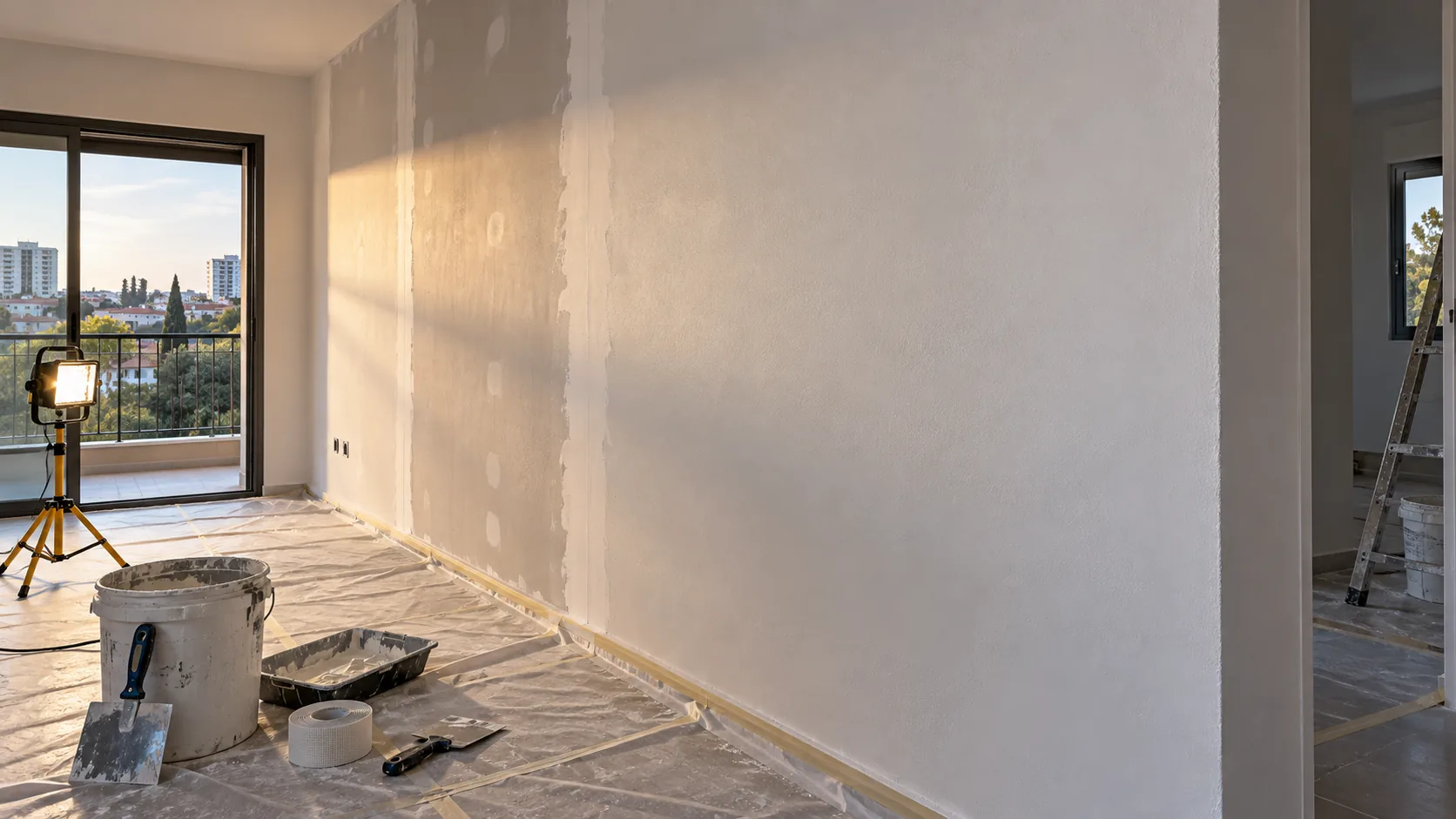
3. Check that the base is stable
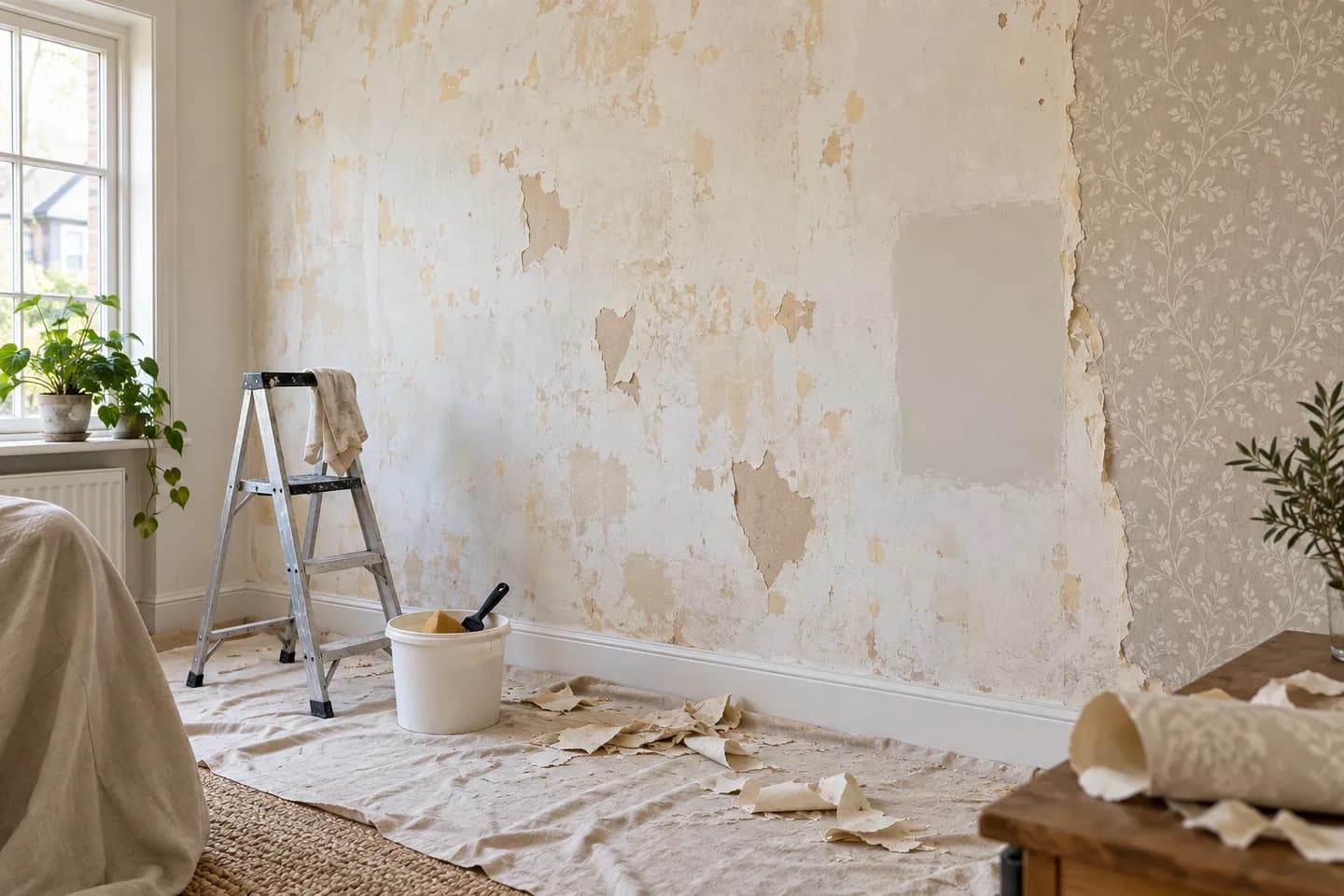
A loose sheet or moving joint needs a construction repair before cosmetic skim. Look at fastening, tape, perimeter junctions and old paint layers. Primer cannot secure flaking coating. If a crack repeatedly follows a joint, ask why it reopens before booking another patch. The repair method depends on the actual frame and substrate.
4. Decide between a patch and a full plane
A local repair can blend under soft front lighting. Under a long grazing LED line, its edge may become more obvious than the original seam. Full-wall skim coating in Kfar Saba may give a more consistent plane, but its suitability depends on the old finish and intended paint. Test the most demanding visible area before committing the entire room.
5. Agree acceptance conditions early
Write down which wall receives side light, the final fitting and the planned coating. View a sample at normal room distance in both daylight and installed artificial light. A handheld lamp placed against the surface exaggerates almost every mark and should not become a surprise acceptance test. Photograph the approved sample as a shared reference.
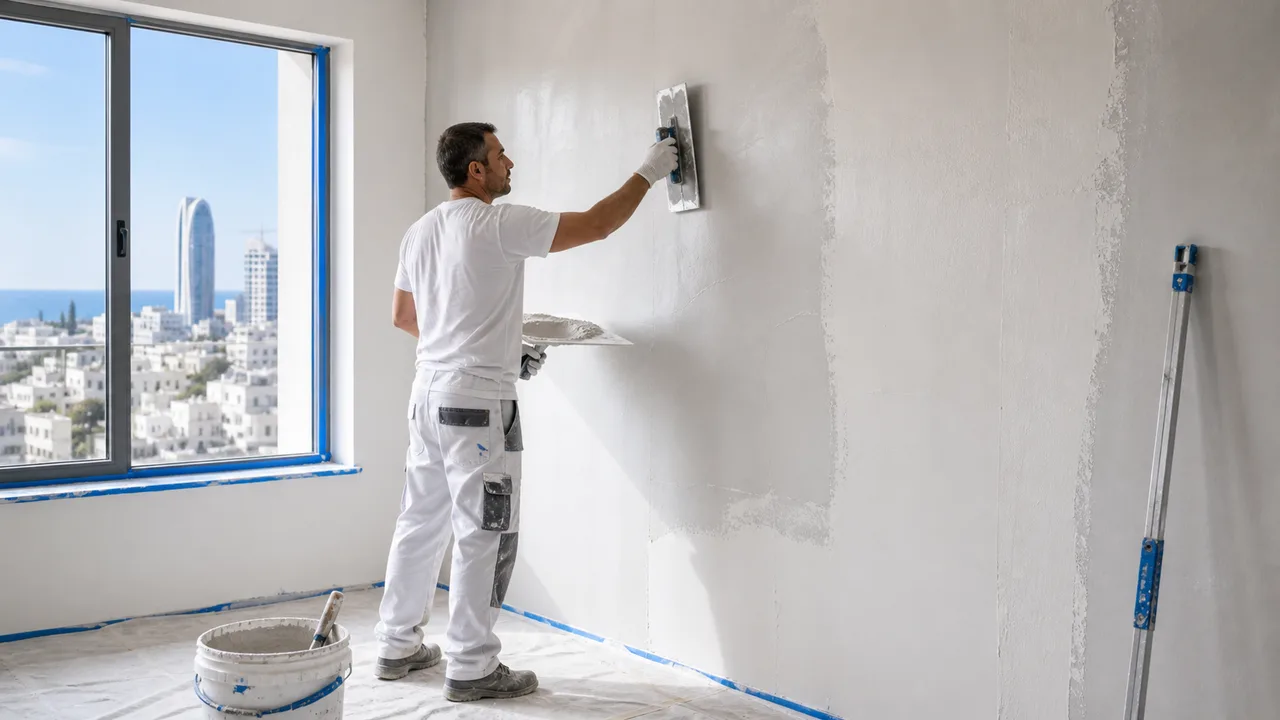
6. Paint cannot flatten a raised seam
A further coat may even out colour, but it does not remove a ridge. Check joint treatment and skim first, then prime and paint according to the selected system. Missing primer can lead to uneven absorption and visible bands. Ask whether the quote includes joint repair, spot skim, whole-wall skim, sanding, primer and the final paint coats.
7. Consider the light and the sightline
A long bare wall beside a window is more demanding than a wall hidden behind storage. Mark the surfaces that must look consistent and those that are concealed. If a linear fitting has not been fixed yet, discuss its position with the lighting specialist; moving it may be more sensible than extensive rework. Never use lighting changes to conceal an unstable joint.
8. Check what the estimate actually buys
Area, old coating, number of joints, height, furniture protection and finish expectation affect cost. Separate weak-paint removal, crack repair, skim, primer, paint and cleanup. The calculator can list operations, but a complex wall still needs inspection. A quote for joint filling is not equivalent to a quote for an entire visible plane.
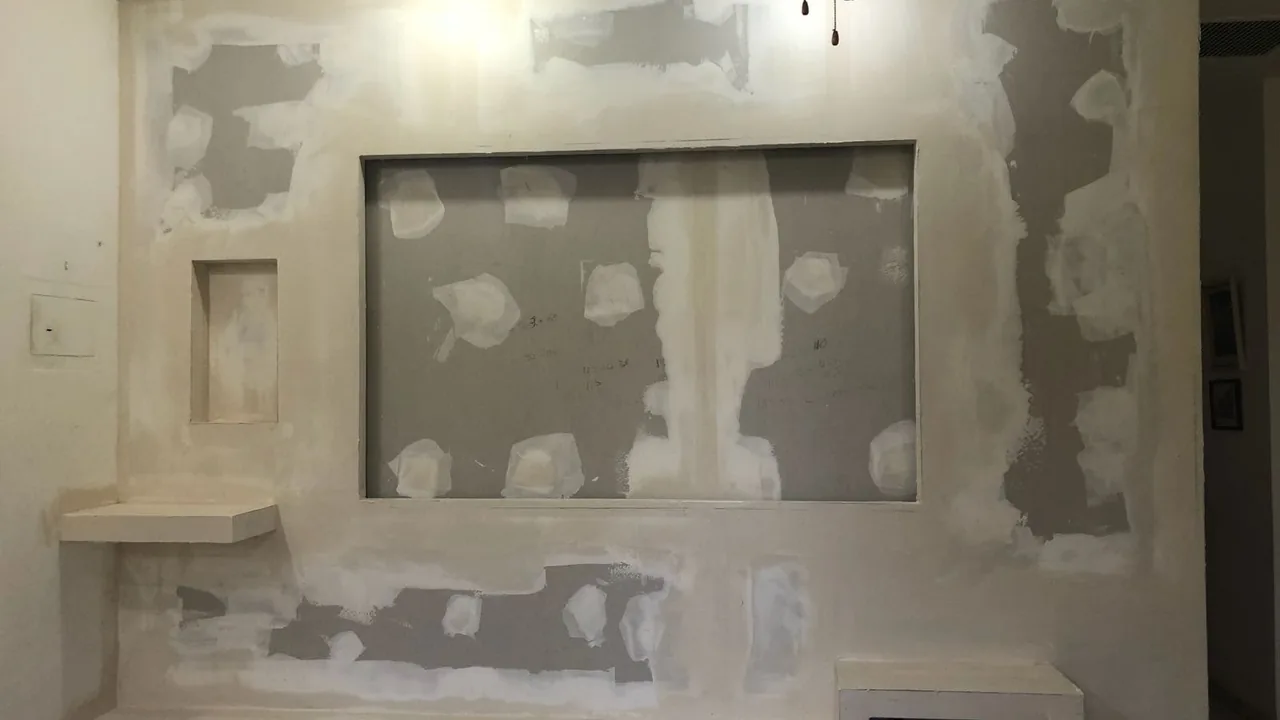
9. Inspect after the finish has dried
Look at the wall in daylight and in the agreed evening lighting after the paint is dry. Check colour consistency, joints, corners and socket edges. Compare with the approved sample rather than the appearance of still-wet paint. Point to a specific defect under an agreed condition so the repair can be scoped precisely.
10. What to send Nikolai
Send your Kfar Saba location, wall dimensions, front and grazing photographs, a short video with the troublesome light and any history of recent repair. Note whether you see a crack or only a band, and whether furniture stays in place. Nikolai can assess board repair, skim and paint from a clear diagnosis rather than promise that one thin coat will solve an unknown problem.
Questions
Why only at night?
Grazing light exaggerates small differences in relief and texture.
Will another paint coat fix it?
Not a raised or moving joint; inspect the base first.
Is full-wall skim always necessary?
No. Lighting, coating and a test area determine the useful scope.
How should we accept the finish?
Against an agreed sample under representative daylight and artificial light.
What affects price?
Area, existing layers, joint repair and the chosen finish.
Relevant services
Guides and practical notes

Message Nikolai on WhatsApp with photos and dimensions, or call him to discuss the next step and what is needed for an estimate.