
Walls after wallpaper removal in Kfar Saba: adhesive, torn drywall paper and paint preparation
Assess adhesive residue, weak coatings and damaged drywall paper; agree a trial area, local repairs or full skim coating before the final painted wall.
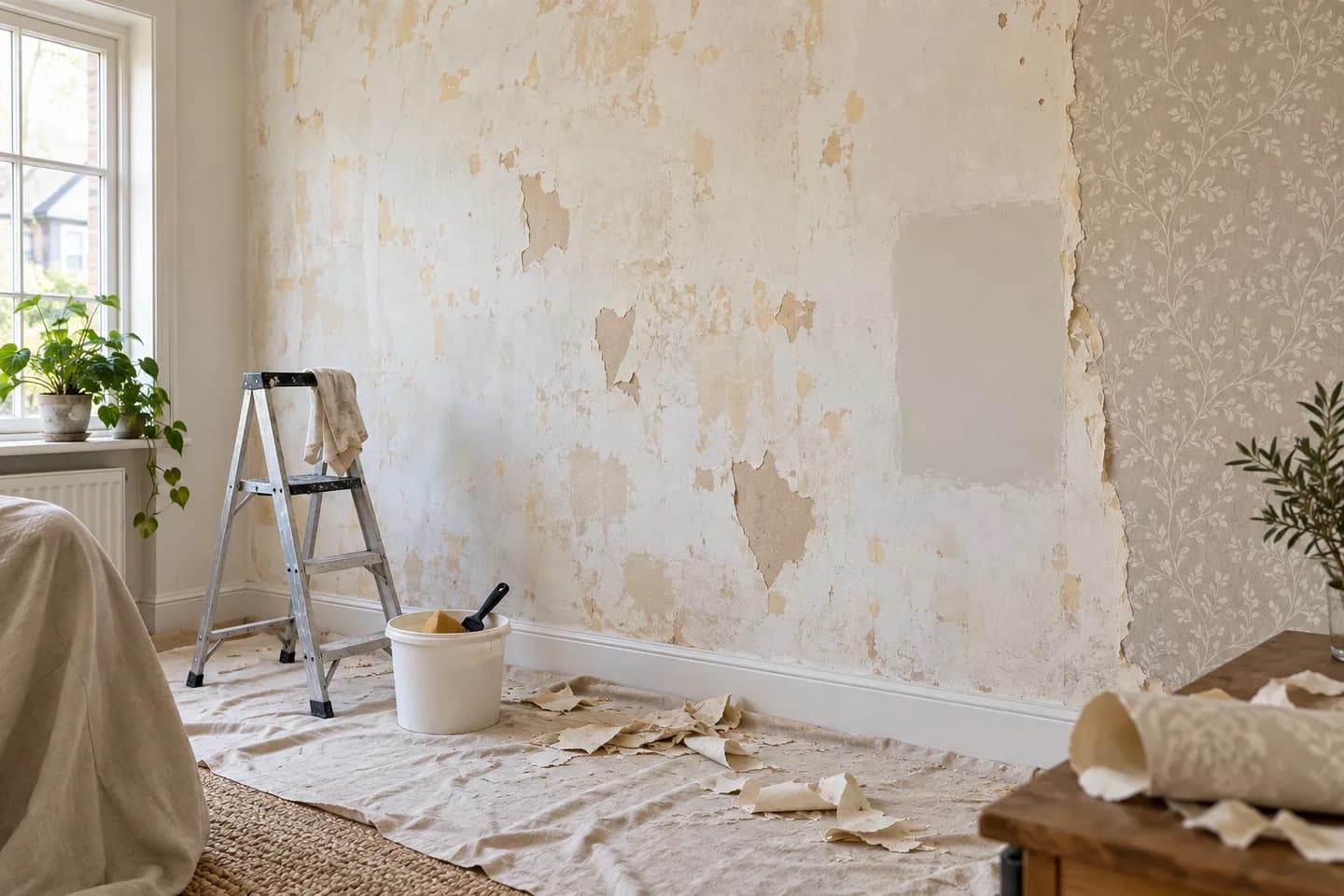
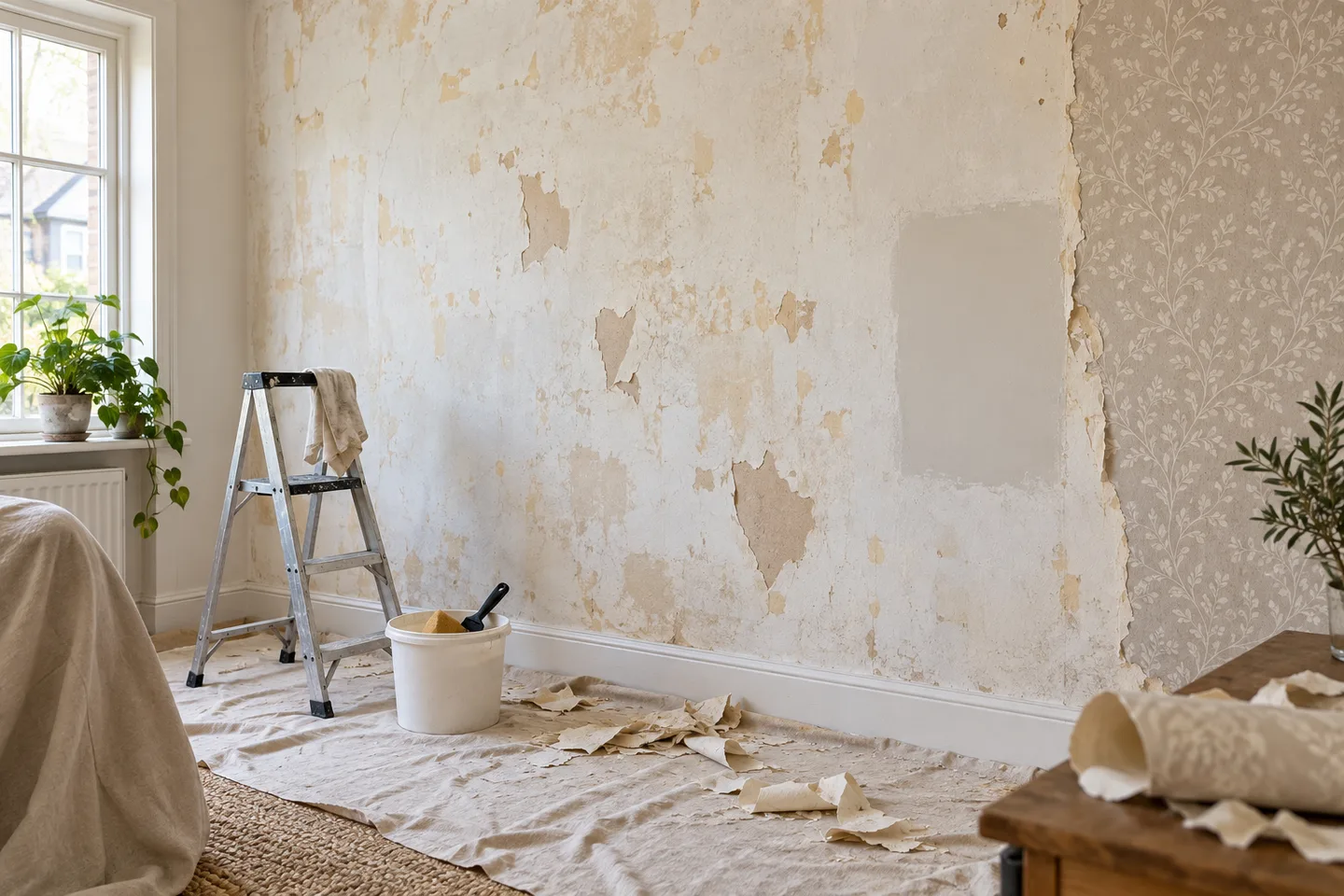
The wallpaper is gone, but the wall is patchy: old adhesive shines in places, backing remains elsewhere and some drywall facing paper is torn. This is not automatically a paint-ready background. The Kfar Saba guide concerns the transition from an old covering to an agreed painted surface. It helps identify checks and operations for a complete proposal without prescribing new lining on every wall. First distinguish removable remnants from the actual background, then select compatible preparation and finally assess the finish. Even two walls in the same room can require different work.
1. Identify the newly exposed background
Wallpaper may conceal plaster, paint, filler or drywall. Remaining wallpaper backing and a board's outer facing can look similar, but they are not interchangeable layers to strip. Do not remove everything paper-like before understanding the background. Overall photographs and already exposed areas help the installer choose the next check. Record the removal method and earlier layers if known. A close-up alone cannot establish one preparation method for a whole room. Include junctions and areas behind furniture because old coverings may vary. The first decision is what must remain sound, not how to make every patch look the same colour immediately.
2. Treat adhesive residue as a compatibility question
Glossy or sticky remains need assessment rather than an automatic paint coat. Water in a later coating can interact with some old adhesive residues. Zinsser describes specialist sealers for such backgrounds. This illustrates a material category, not a claim that one product suits every wall. Confirm condition, preparation and the chosen system's compatibility. Weak residue is not made suitable merely by calling the next material primer. The proposal should explain what is removed, what may remain and how the sequence is checked before treating the full area.
3. Do not strip board facing to obtain a white surface
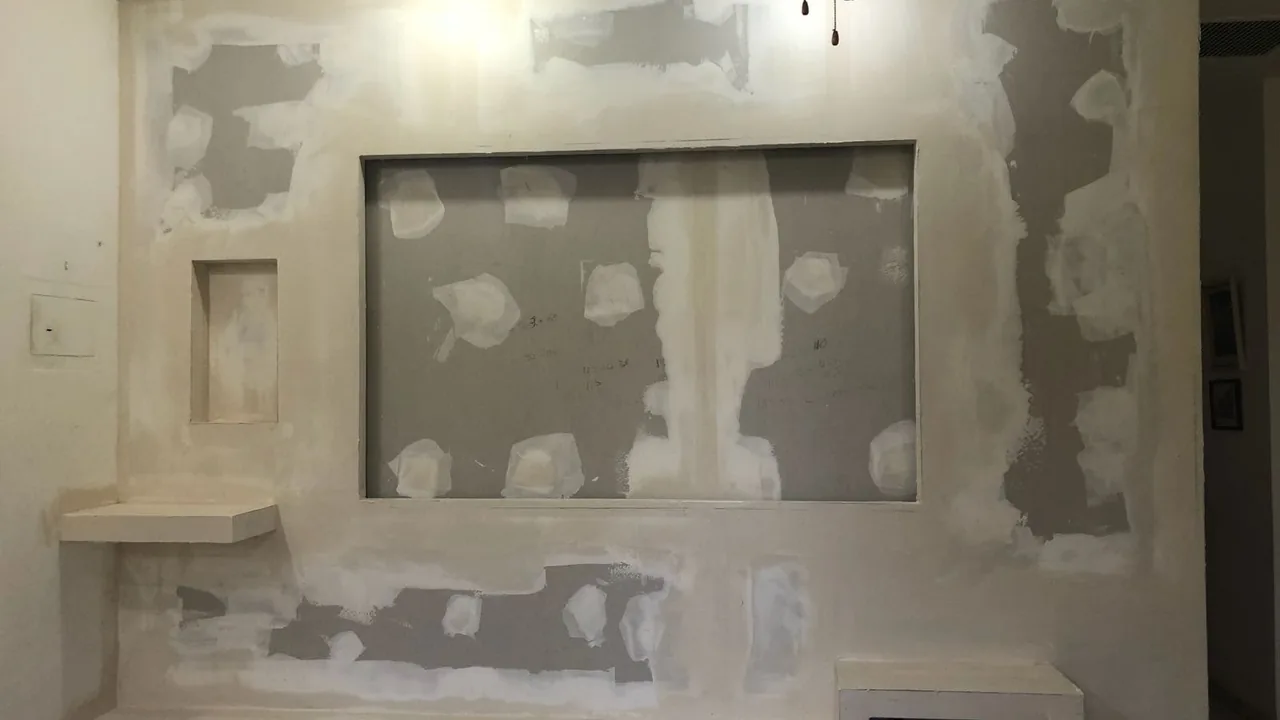
Removing wallpaper can leave fuzzy or partly detached drywall paper. Treating it as dirty paint and scraping indefinitely towards the gypsum core can enlarge damage. The installer should assess the stable boundary, board suitability and preparation for the next layer. A local defect does not automatically mean replacing the whole wall, but a failing board cannot be hidden beneath fresh decoration. Discuss drywall wall repair separately where the background itself is damaged. Ask for the difference between decorative preparation and restoring construction to be explained. Their scope, cost basis and expected outcome are different.
4. Agree a representative trial before the full area
On a mixed old background, a trial of the proposed sequence can be useful. Select a representative problematic area, rather than the cleanest corner. Assess stability and appearance after the stages required by the materials. Agree format, cost and timing beforehand; a free sample is not implied. The result can refine scope before repeating the operation throughout the room. Several different backgrounds may need more than one check. Record which surfaces have been assessed and which remain uncertain. A successful small trial should not become an unsupported guarantee for every wall, particularly where some wallpaper has not yet been removed.
| Exposed condition | Next question | Do not assume |
|---|---|---|
| Adhesive residue | Removal and system compatibility | Any primer will work |
| Fuzzy board facing | Sound boundary and condition | Strip all paper to gypsum |
| Small marks | Local or whole-plane preparation | Automatic wall replacement |
| Damp area | Cause and background suitability | Paint cures an active fault |
5. Choose local preparation or a complete skim
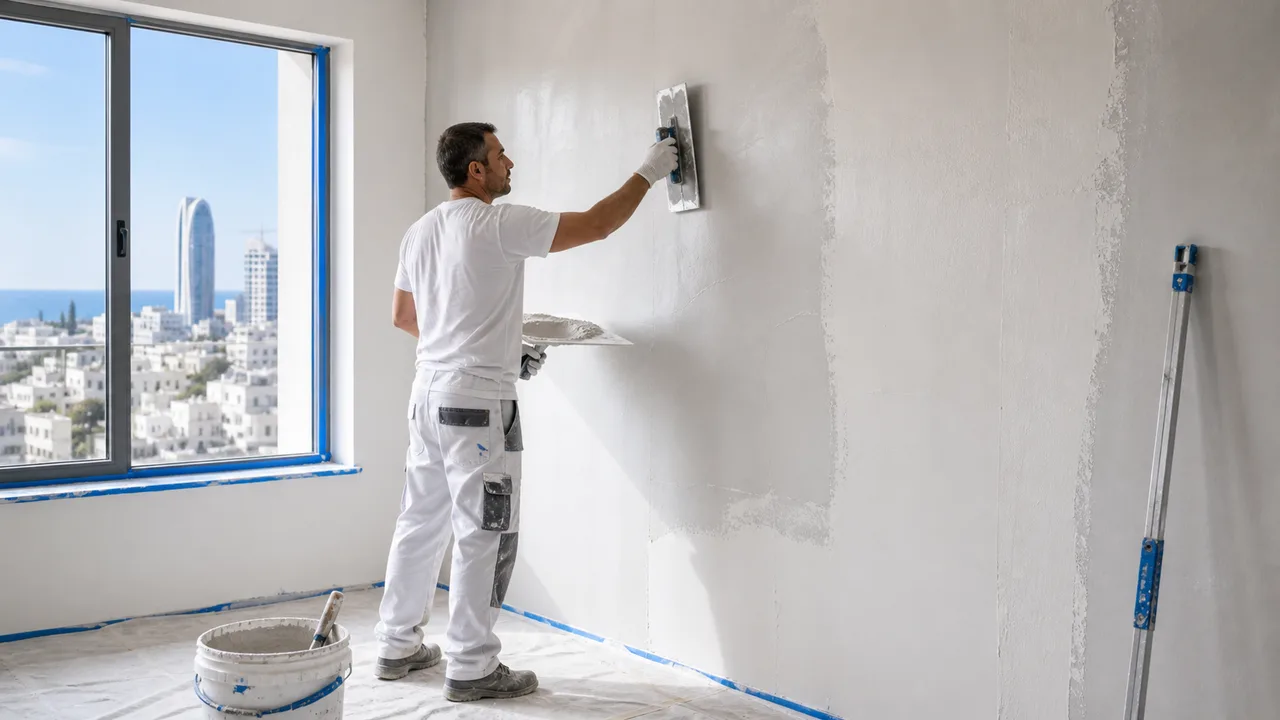
After appropriate removal and stabilisation, assess shape. A few shallow marks and widespread uneven texture can require different scopes. Full skim coating is not a substitute for addressing an unsound background. Full-wall skim coating is relevant when an agreed unified plane is needed. Compare the smallest sufficient preparation with a more demanding finish while keeping painting equivalent. Identify permanent side lighting and intended sheen. Otherwise the installer may price filling defects while the owner imagines a surface suitable for light that reveals every irregularity. Record the expected result in terms both parties can inspect afterwards.
6. Do not conceal unexplained damp areas
Water marks, damp background or recurring deterioration alter the sequence until suitability is established. An old dry mark and an active fault are different conditions. A sealer for residual contamination does not repair a moisture source. Do not diagnose every Kfar Saba wall from the city name or a window's proximity. Provide the known history of the particular area. The peeling-paint guide helps frame background questions. Preparation for painting is not an offer to repair a leak or make a health diagnosis. Resolve the relevant uncertainty before agreeing that decorative work can proceed.
7. Define appearance before buying the paint
Choose the shade, sheen and painted boundary for the prepared wall. View a sample under ordinary daylight and artificial lighting. The texture of a former wallpaper area can remain visible even with one colour. Discuss a transition at the corner where another wall stays untouched. The interior paint selection guide complements background decisions rather than replacing them. A finish acceptable in soft light can differ from expectations under a wall-washing light line. Include these conditions in quotation discussions so preparation quality is not confused with an appearance requirement introduced only after completion.
8. Measure walls instead of apartment floor area
A wall assumed to be 4 metres wide and 2.7 metres high has 10.8 m² before openings. Removal, background repair and complete painting can cover different areas. Show them on one drawing and agree measurement rules. Do not use apartment floor area as though it represented every wall. The current calculator supports published preparation and painting items where their scope matches. A particular old covering or unknown damaged layer needs its own description. Ordinary painting of a ready surface does not honestly price those conditions. Separate quantities make it easier to understand changes once more of the old covering is removed.
9. Clarify the quote after the covering is opened
Distinguish removal and agreed remnants, protection, assessment, trial area, local repair, sealer or primer, skim coating and painting. Clarify materials, delivery, waste and taxes. Not every wall needs every operation; the offer should explain the choices. If the full picture emerges only after stripping, agree a pause, photographs and scope approval before additional work. This is more useful than pricing replacement of every wall in advance or quoting a low figure unrelated to a finished result. Nikolai's brief concerns applicable preparation and finishing within existing services. Any related specialist work remains explicitly coordinated rather than silently included.
10. Organise work and inspect the finished surface
Show furniture, outlets, reveals and the route through the apartment. Appropriate specialists handle their connections; wall preparation does not automatically include electrical installation. Agree protection and sequence beforehand. After the required drying stages, inspect for blisters, detachment, untreated transitions and inconsistent appearance under the agreed conditions. Keep material information and the paint reference. The finish handover checklist helps record specific observations. Begin care according to the coating's recommendations rather than as soon as the wall looks dry. Check retained areas too, because a good result includes both the new finish and the protection agreed around it.
11. Prepare a Kfar Saba assessment request
Send overall wall views, remaining covering and close-ups of already damaged areas. Include approximate dimensions, background type, removal method, known earlier layers and stain history. State whether one wall or the whole room is involved. Name retained furniture and finish inspection conditions. If wallpaper remains in places, say so: final scope may still be uncertain. A useful request asks about suitable preparation and sequence, not only the price of a primer tin. An agreed trial stage can turn an uncertain old wall into a specific repair task with observable decisions and an understandable finishing boundary.
Questions
Can I paint immediately after stripping?
Only after the background is checked and prepared for the selected system. Removal alone does not establish readiness.
Is there one universal primer?
No. Its purpose depends on the retained layer and compatibility with subsequent finishing.
Does torn paper mean replacing the wall?
Not always. Assess depth, stability and the condition of the board.
Will full skim coating solve adhesive problems?
It does not replace appropriate preparation of a weak or incompatible retained layer.
Why make a trial area?
To check the proposed sequence on the actual problematic background before treating the full surface.
Relevant services
Guides and practical notes


Message Nikolai on WhatsApp with photos and dimensions, or call him to discuss the next step and what is needed for an estimate.