
Visible drywall joints after painting in Ra'anana: tape repair or a finish problem?
Distinguish a crack, ridge, tape blister and sheen difference; decide when the joint, board fixing or complete painted plane needs attention.
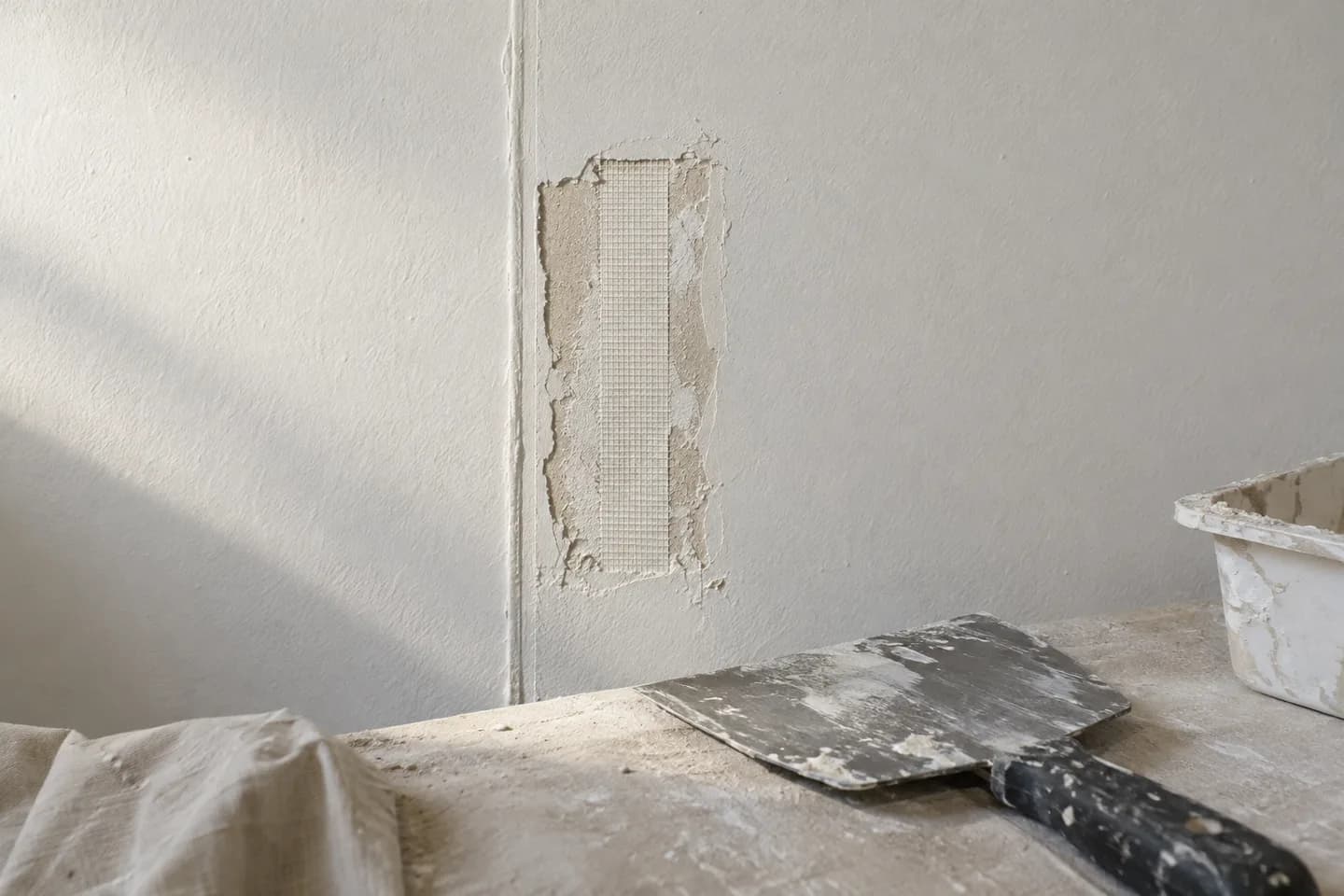
A straight stripe appears on a wall that looked smooth before painting. Another coat may not solve it: joint shape, detached tape, uneven absorption or background movement can produce different symptoms. This Ra'anana guide helps prepare a clear repair request and compare complete proposals. It concerns joints between drywall boards. A junction with masonry, a water mark and damaged fixing require their own assessment. A photograph cannot reliably assign the same cause to every similar-looking stripe. Begin by describing the observation, then agree what needs checking and where the finished repair should end.
1. Record what you see without diagnosing it
Does the line show in ordinary room light, only beside a window or after cove lighting is switched on? Is it a hollow, ridge, open crack, blister or colour difference? Record when it appeared and whether it changes. An overall view shows location; a close-up shows shape. Use consistent lighting when comparing photographs over time. Do not strip a coating to create a more convincing picture or conceal a recurring crack before assessment. A visible symptom does not prove missing tape or failure of the whole frame. Separate observations from assumptions about the person responsible for earlier work.
2. Surface shape and sheen need different responses
A broad stripe may feel flat but reflect light differently. A narrow ridge or depression changes the surface geometry. These require different preparation decisions. Agree an inspection under normal room lighting and identify permanent raking light if it matters. The side-light and finish guide explains why appearance is not simply a question of white colour. A flatter paint may change visibility but cannot stabilise a moving joint. The installer needs to assess the retained surface and compatibility of the next coating before selecting scope. Different symptoms on one wall should not all be labelled cracks.
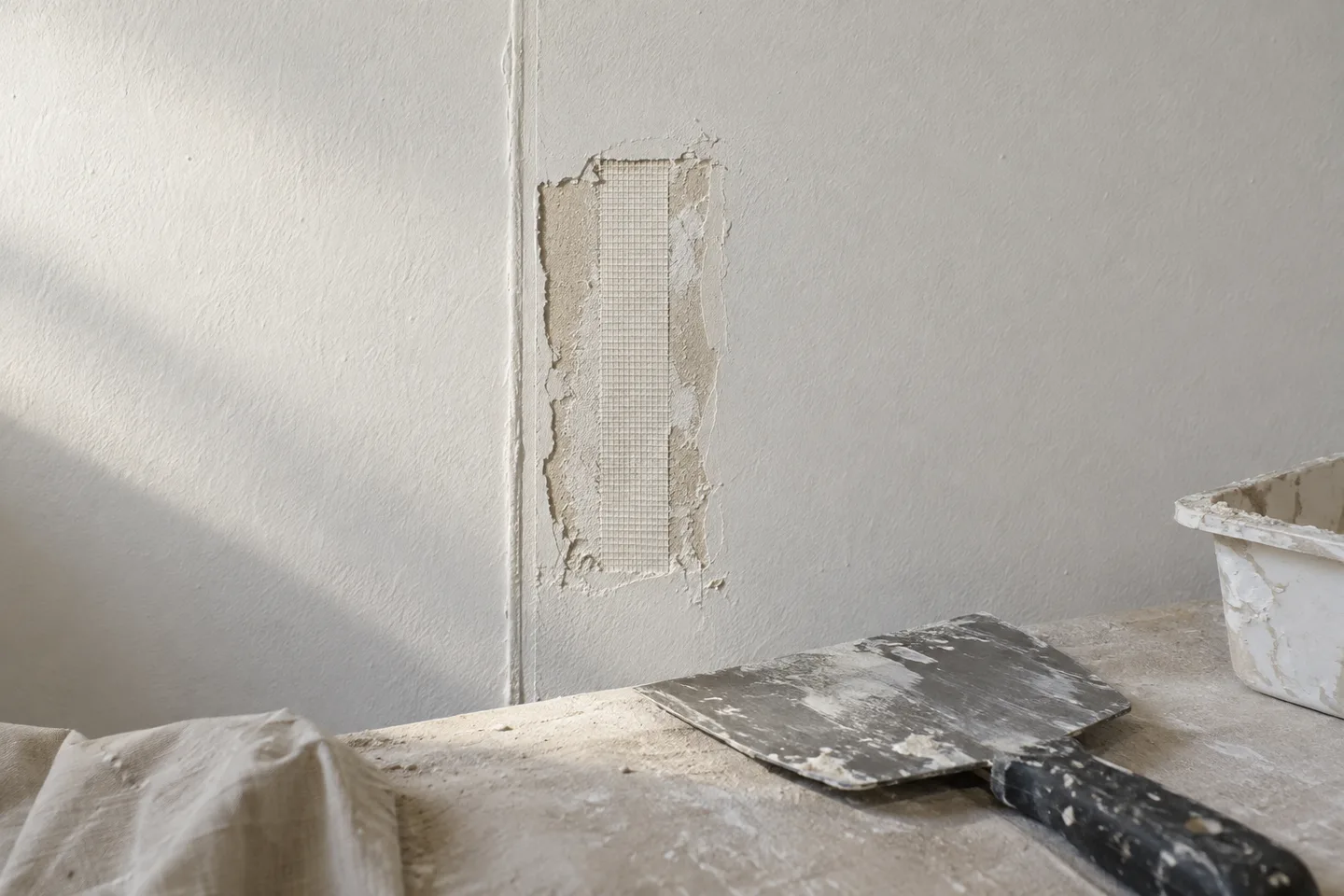
3. Understand the role of joint tape
Tape and an appropriate compound work together at board junctions. British Gypsum describes paper tape as reinforcement for joints and internal angles. The material's name alone cannot promise freedom from cracks on every background. Specification, boarding condition and execution still matter. Ask how the existing joint will be restored and why that method suits it. New tape over a weak detached layer is not a substitute for preparation. This is a system decision for the installer, not a universal instruction for a homeowner to cut open every visible seam.
4. Check boarding and support when necessary
Movement, recurring opening or fastener marks can mean that new filler alone is insufficient. Boarding, support and the reason for change need assessment. Fresh water damage or deformation also alters the sequence. Cosmetic work should not be promised as a cure for an active problem. Drywall wall repair can include restoring a section before finishing, but its need and extent follow checking. Ask what will be opened and what must be confirmed before closing. An undamaged adjacent area does not prove that it needs removal together with the defective joint.
| Observation | Check | Possible scope |
|---|---|---|
| Stripe without relief | Reflection and coating | Preparation and unified finish |
| Ridge or depression | Joint geometry | Levelling a suitable background |
| Blister or detachment | Sound layer boundary | Joint restoration |
| Recurring crack | Movement and construction condition | Cause before cosmetic finishing |
5. Assess blisters and detached edges
Where tape or coating has separated, identify a sound boundary and understand what can remain. Filling over an unchecked void risks retaining the same problem. Equally, a small defect does not automatically require rebuilding the whole wall. Agree local restoration and the later extent of preparation. The installer selects compatible materials and follows their sequence. Do not prescribe one repair-strip width from an internet picture: geometry and expected appearance affect it. Photograph discoveries for approval, especially where the original quote was based only on the painted surface. A clear decision after opening is better than silently expanding a small repair into a larger finish job.
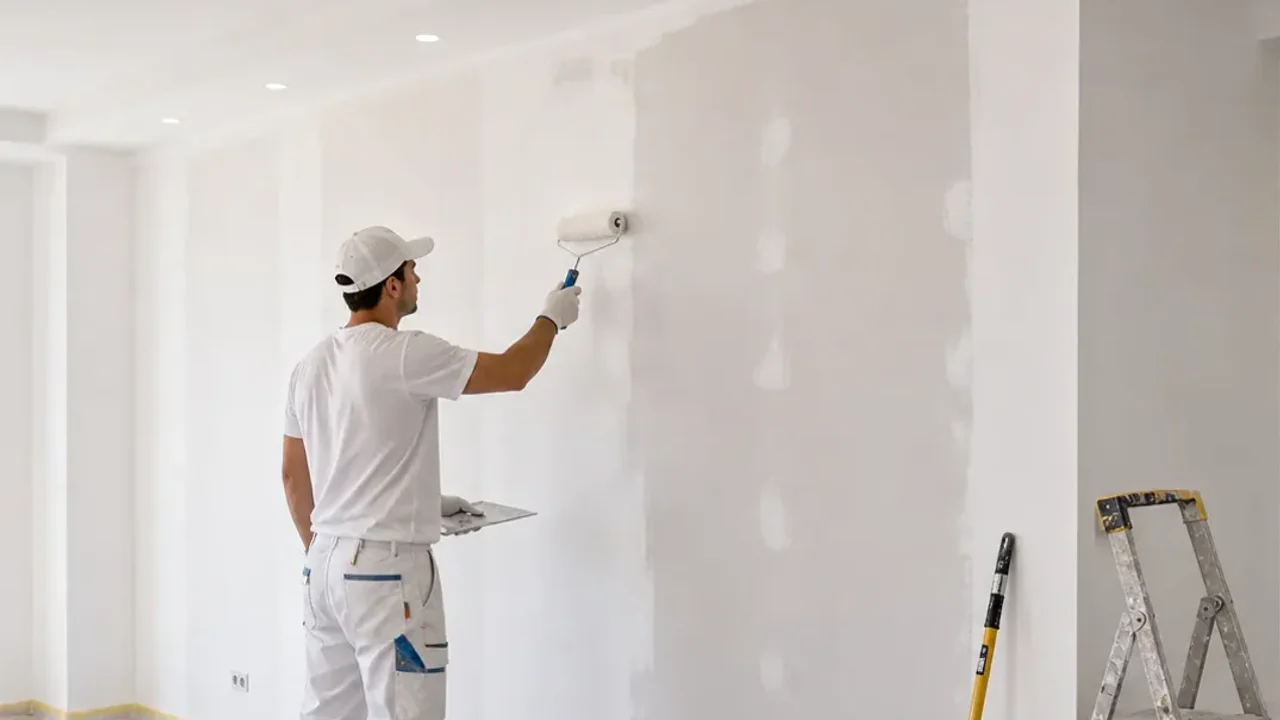
6. Keep different junctions distinct
A masonry junction, internal angle, doorway edge and ordinary straight board seam have different conditions. Show the line's location relative to these details. Cracks at masonry junctions are covered separately. If several symptom types occur, mark them on one plan so the quote does not group everything under joint repair. For recurring marks, provide the repair history: what was added and how long before the line returned. This does not replace a visit, but it helps avoid another generic proposal to cover the entire area with paint without identifying the relevant construction detail.
7. Separate joint restoration from whole-plane preparation
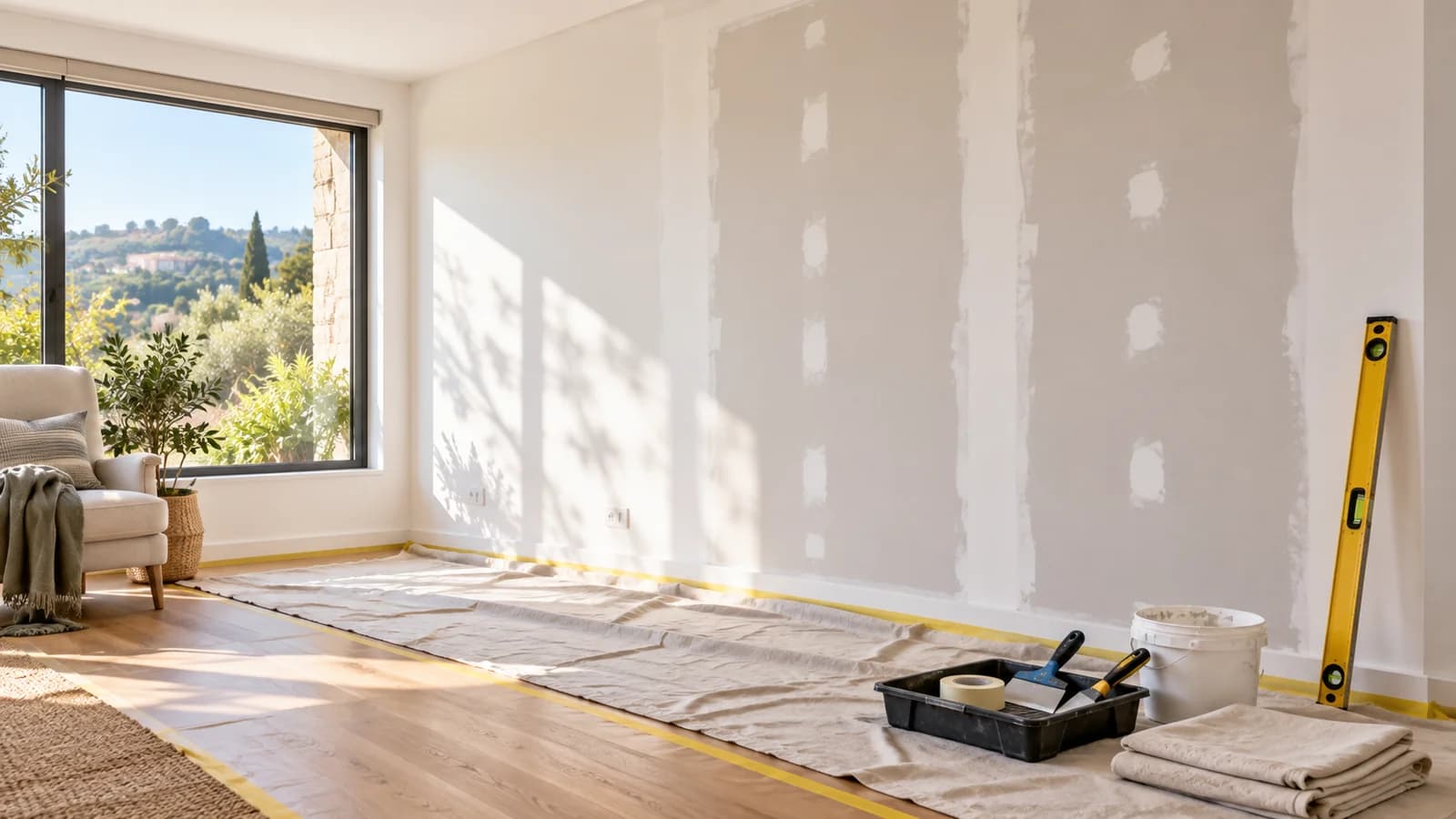
Repairing a connection and producing a unified plane under demanding light are related but different scopes. Sometimes the joint is restored and the whole wall painted; sometimes broader preparation is necessary. Full skim coating is not automatically required at every seam. Drywall joint treatment needs an understood boundary, while preparation for painting needs an agreed appearance. A photograph cannot guarantee an invisible match to every old texture. Define whether an adjoining corner is retained and where new paint ends at a door, ceiling or different finish.
8. Measure joints and finishing areas separately
Three assumed vertical seams at 2.7 metres each total 8.1 linear metres. The painted wall may be much larger than the repair strips. This is a quantity example, not a rate or installation specification. Separate checking and preparation, joint restoration, possible board repair, primer and finish in the quote. The calculator applies to matching published items; a painting rate does not price background repair. Clarify materials, protection, access, agreed waste and taxes. Comparing only one linear-metre rate can hide very different end results, especially if one quote includes the whole painted wall and another stops at a narrow unfinished strip.
9. Allow the chosen materials to follow their stages
The necessary sequence depends on the system and retained layers. Preparation, joint restoration, subsequent coats, sanding, priming and painting do not necessarily happen in one continuous visit. Drying conditions follow the materials and room. A furniture deadline should not force covering an unready layer. In an occupied apartment, agree protection and access, particularly for a repair in a passage. If a specific fitting creates demanding light, account for it before finishing. Inspection under a new light should not reveal an important appearance requirement for the first time. Record readiness checks as part of the schedule rather than assuming each coat is immediately suitable for the next.
10. Inspect the agreed result
Examine the dried surface under agreed conditions for stripes, blisters, transitions, even coating and junctions. Check the completed boundary against the schedule, not just a close-up of the repaired point. Record exact observations and keep material information. If the reason for movement remained uncertain, a neat final coat does not resolve that uncertainty. The general handover checklist separates the concealed stage from paint inspection. Agree any observation period and procedure for a returning mark with the installer. Do not invent a universal warranty from a guide, product name or photograph of one repaired seam.
11. Prepare a Ra'anana seam-repair request
Send the area and address, wall or ceiling type, overall views, close-ups and window or cove-light positions. Include dimensions, finish age, earlier repairs and known moisture history. Say whether anything moves and describe what you actually observed. Ask for joint restoration and the necessary finishing plane to be assessed separately. Nikolai can clarify scope and whether a visit is needed. The purpose is to choose a reasoned repair and finish, rather than buy another white coat in advance. Where information is incomplete, a useful response should identify remaining questions and the next check.
Questions
Will repainting help?
Only where the problem is a finish suitable for repainting. Shape, detachment or movement require another response.
Does a visible stripe prove missing tape?
No. Appearance alone does not reliably establish the concealed joint specification.
Must the whole room be skim coated?
Not automatically. Preparation and paint extent depend on the surface and agreed appearance.
Can the price follow crack length alone?
A complete quote also needs background condition, preparation, painting and access.
What if the line returns?
Keep photographs and repair history, then assess the recurring cause before another cosmetic layer.
Relevant services
Guides and practical notes
Message Nikolai on WhatsApp with photos and dimensions, or call him to discuss the next step and what is needed for an estimate.