
Repairing a drywall plumbing box after a leak in Or Akiva
How to rebuild a plumbing box in Or Akiva after pipe work: dry cavity, service access, board, finish, price and inspection.
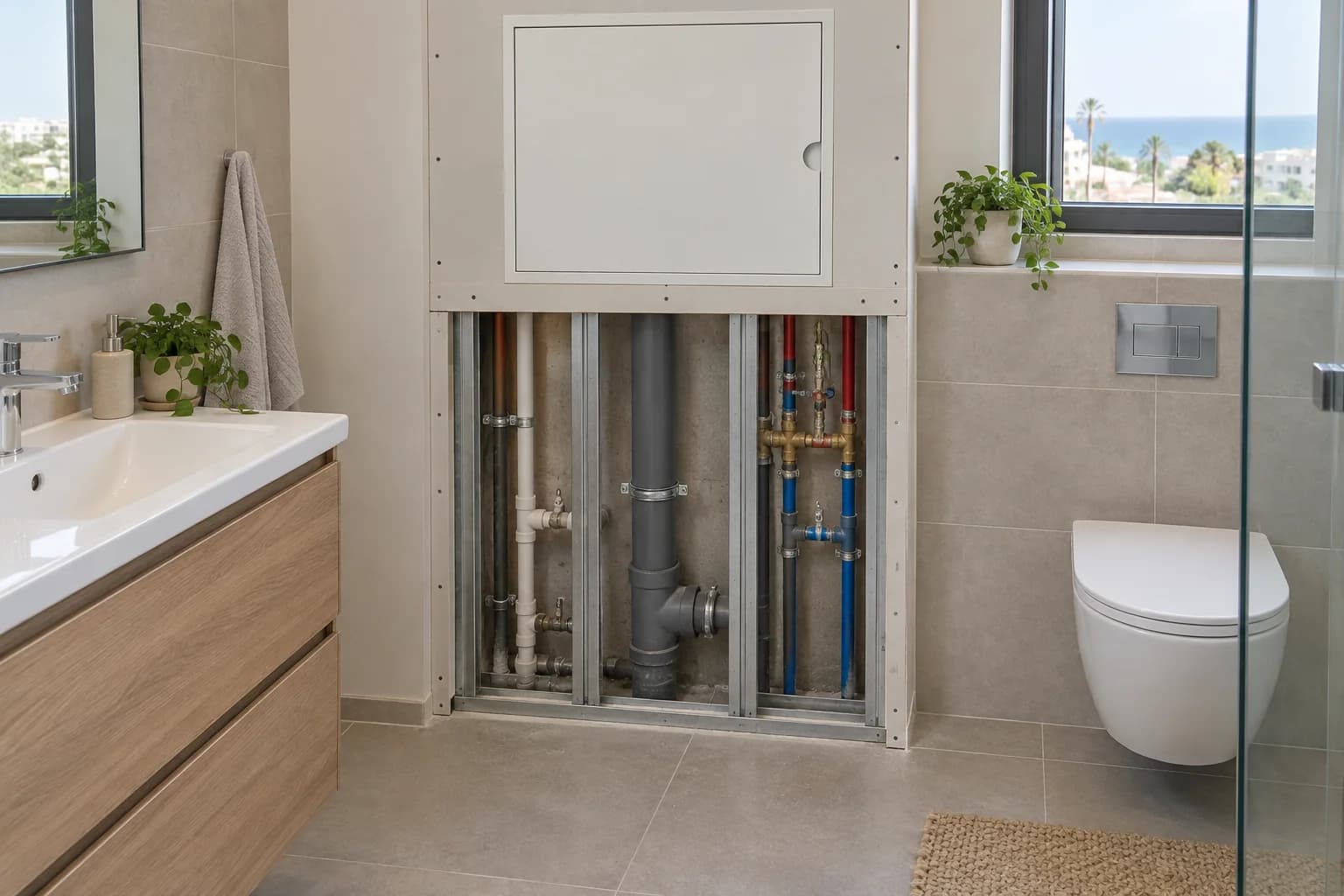
A plumber may fix the pipe while leaving an open shaft and damaged lining. Closing it well means checking the cavity and making the next service visit possible without demolition. This Or Akiva guide separates plumbing from drywall work. It describes a typical situation, not a documented NikoGips project.
1. Confirm the leak is fixed
Ask the plumber which pipe failed, what was replaced and how the repair was tested. Inspect the framing, fixings and surrounding wall before closing. Gypsum Association guidance says water-exposed board generally needs replacement unless all retention conditions are met. A dry-looking paint surface does not prove the cavity is dry.
2. Define the removal boundary
A supported local patch can work when the remaining board and frame are sound. Soft board, rusted fixings or poor future access may require a larger section. Mark the confirmed removal area and possible expansion separately. Tiles and paint matching may drive more cost than the box frame itself.
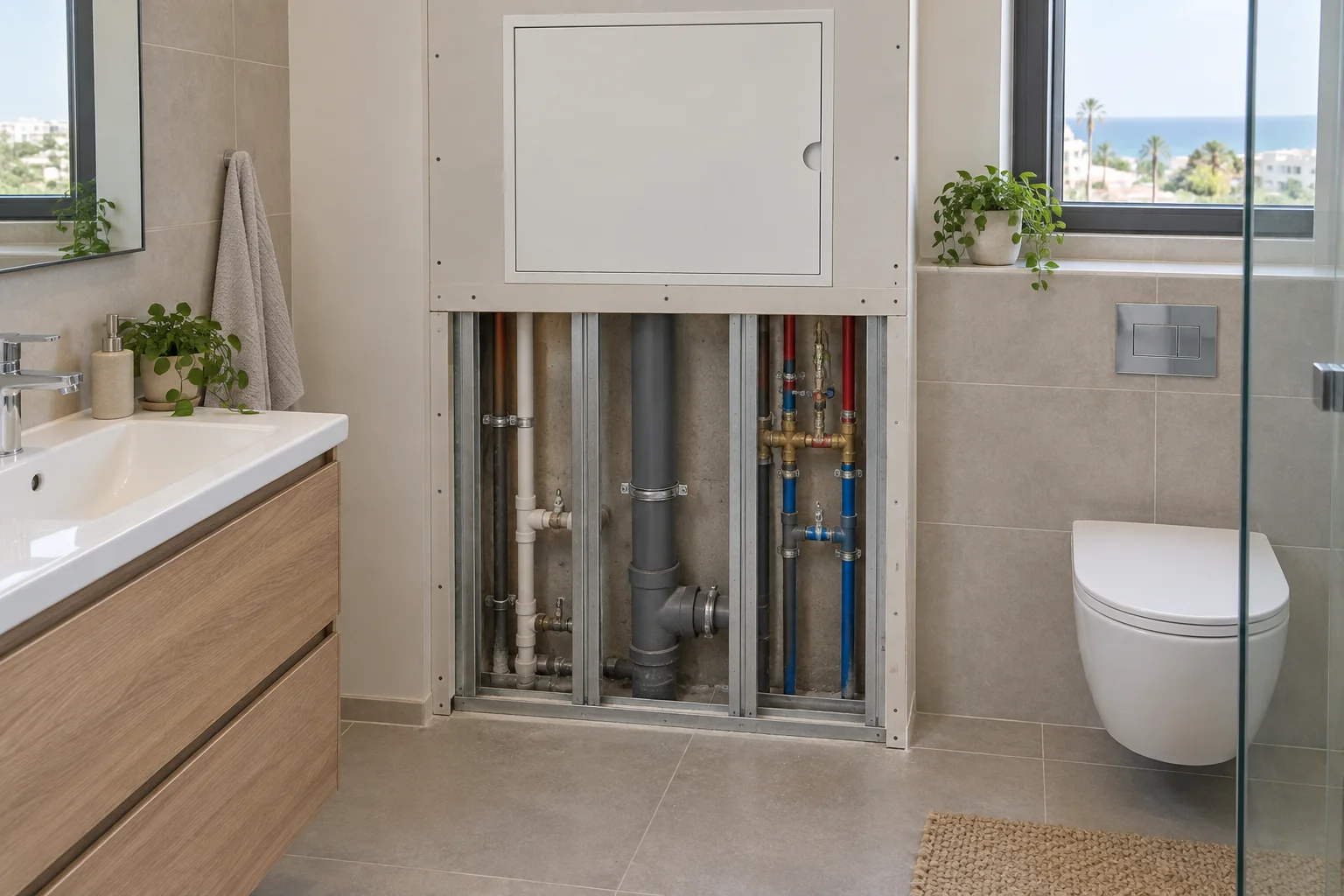
3. Design a usable inspection opening
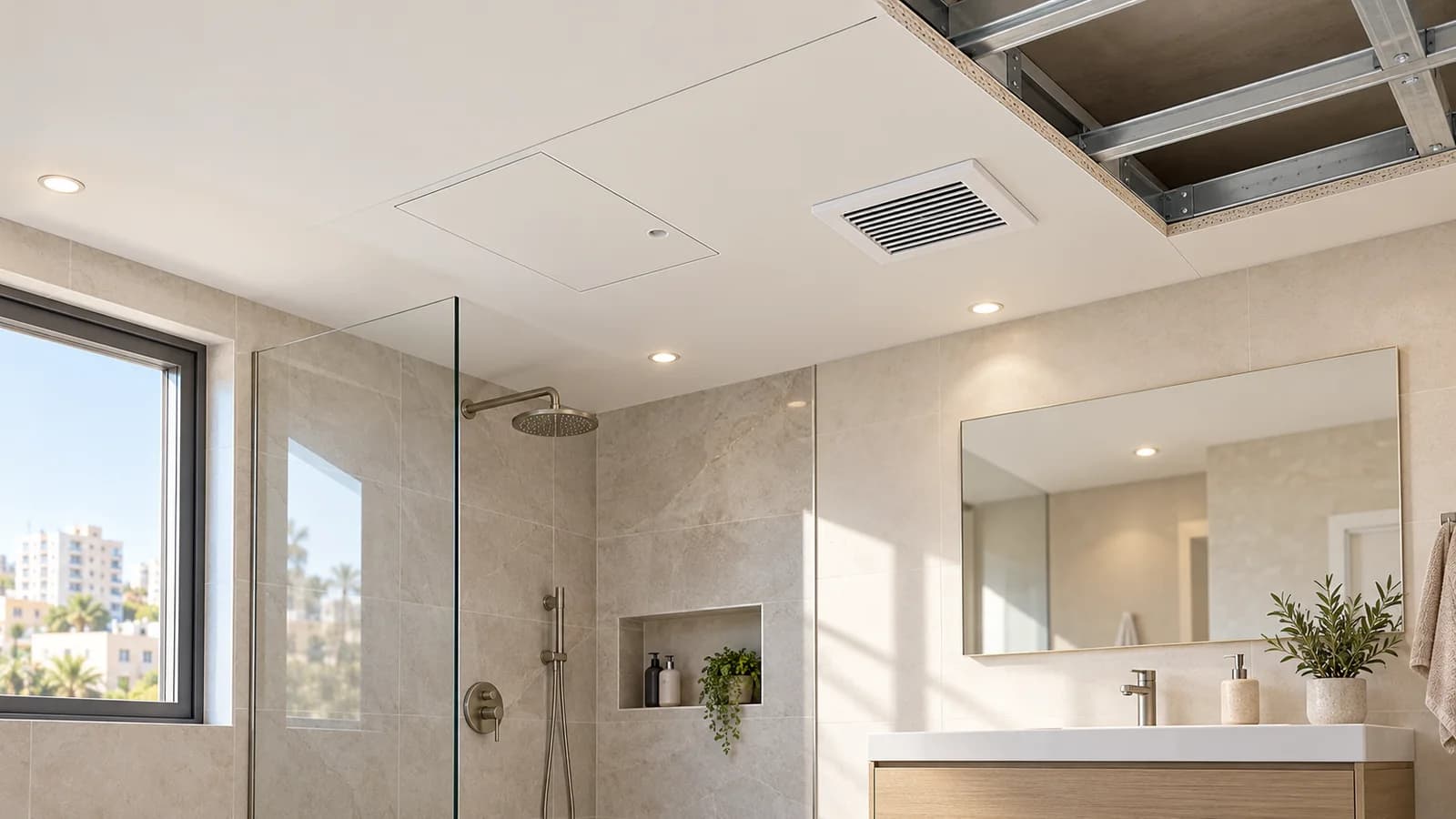
Locate every valve or connection that must be serviced. An access hatch is useful only if a hand and tool can reach the component. Check the hatch swing against furniture and fittings and agree on size with the plumber. The access panel guide covers concealed hatch details.
4. Select a wet-area assembly
Moisture-resistant board is not waterproof and does not fix recurring leaks. Shower splash, floor junctions and existing waterproofing affect the selected system. Agree on joint protection and tiling separately. The wet-area board guide explains why a green board alone is insufficient.
5. Clarify responsibility for shared services
In an apartment building, a shaft may contain shared services. Check building access rules before enclosing it. The plumber confirms the pipe repair; the drywall specialist restores the box and finish; an electrician checks any affected wiring. Keep photos before closure in case the origin of moisture is disputed later.
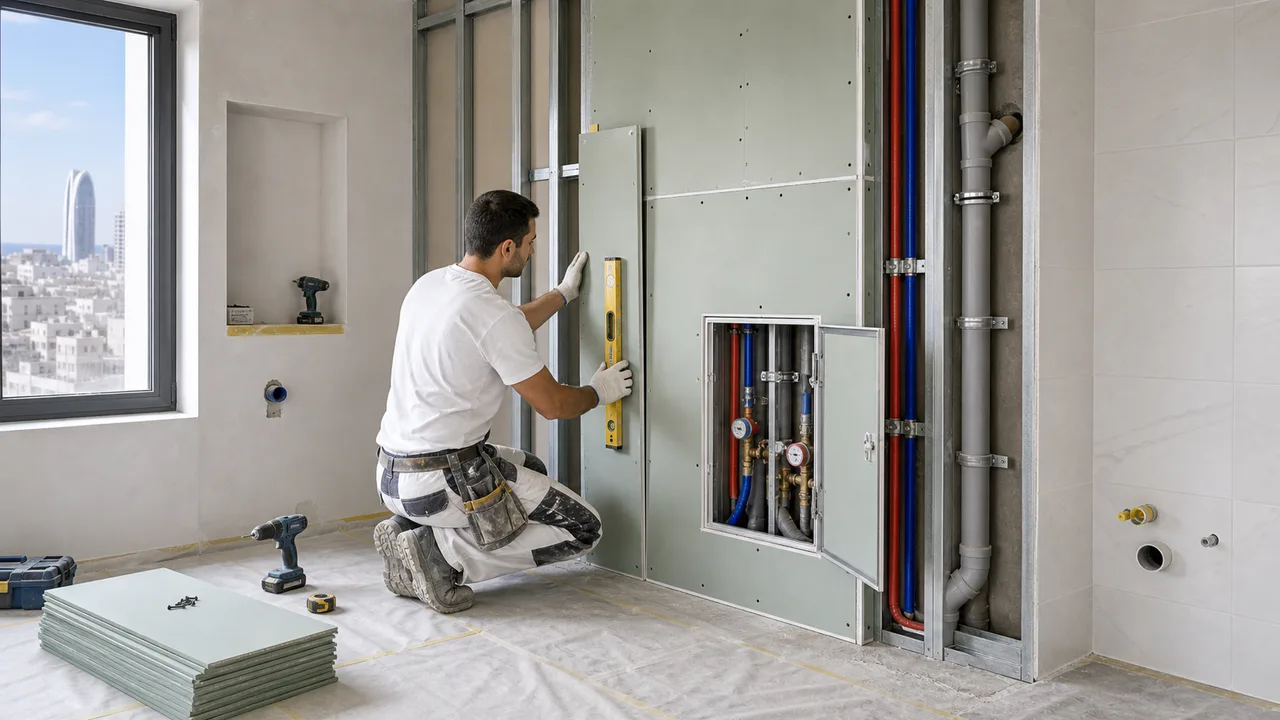
6. Follow a safe sequence
Stop and test the leak, remove damaged material, dry and inspect the cavity, mark access, rebuild the frame, verify reach, board, joint and finish. Photograph the open cavity and pipe location. Additional tile work and delivery of a suitable hatch can affect the calendar more than the size of the opening.
7. Read the Or Akiva estimate
Scope, height, damaged framing, hatch type, tiling or paint, debris and specialist work determine the cost. Ask for materials, labour, finish, protection and tax as separate items. The calculator provides only an initial construction range; it cannot diagnose a concealed wet area.
8. Photograph the whole box
Send the entire bathroom, box height and width, exposed pipes, damage with a ruler, floor and ceiling junctions, and door or vanity that may block the hatch. State whether matching tile or just a sound closure is required. Include the plumber's repair description and Or Akiva location.
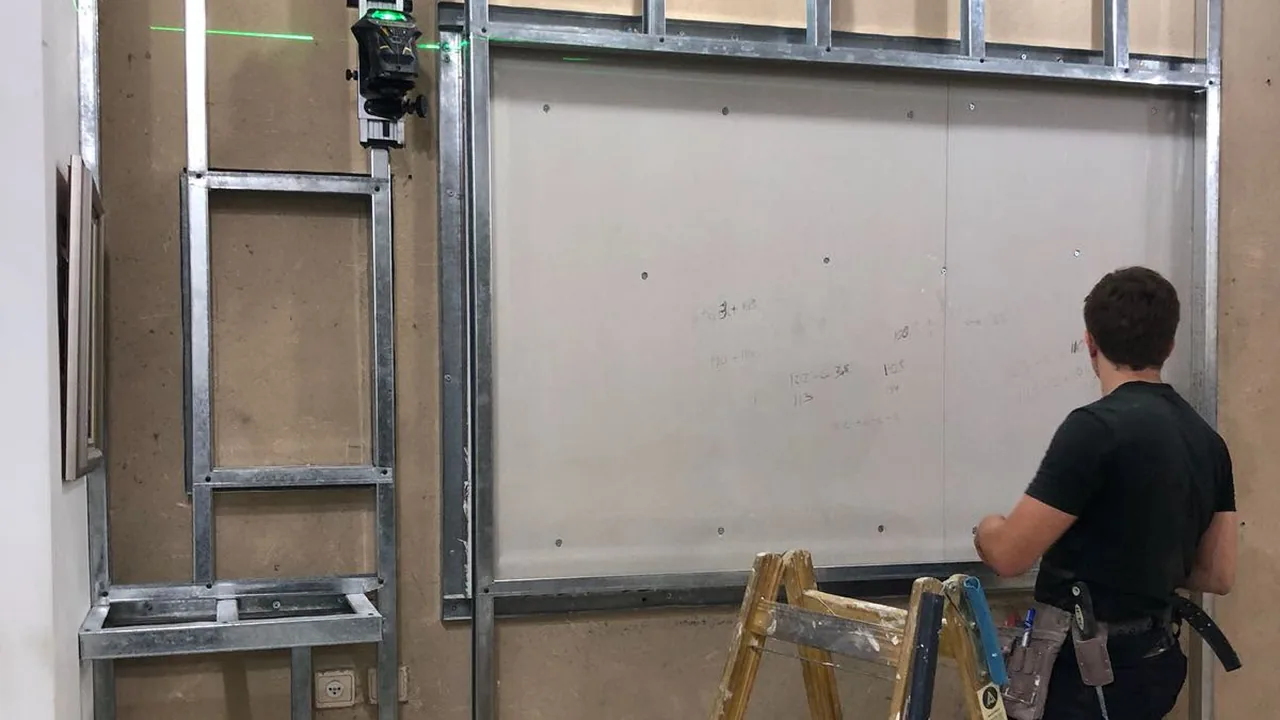
9. Inspect access and finish
Open the hatch yourself and reach each agreed service point. Inspect seams and floor junctions after drying and save photos of hidden pipes. A renewed stain or odour calls for diagnosis of the water source, not another coat of paint. Use the finish checklist too.
10. Know when to pause
Do not close the box while the leak remains unknown, board is wet, valves will become unreachable or building requirements are unclear. Request a written scope with demolition, board, hatch, finish and responsibility for plumbing. A pause for inspection is cheaper than reopening a newly tiled box.
Questions
Can the box be closed right after a pipe repair?
Only after the repair is tested and the cavity assessed.
Is a hatch necessary?
Provide access wherever serviceable parts remain inside.
Is moisture-resistant board waterproof?
No; wet-area protection is a system decision.
Why can a small hole cost more?
Tiles, access, drying and finish may dominate the work.
Who fixes a repeat leak?
The water source requires a plumber or relevant specialist.
Relevant services
Guides and practical notes
Message Nikolai on WhatsApp with photos and dimensions, or call him to discuss the next step and what is needed for an estimate.