
A hole in a drywall wall: how to repair it and what it costs
Assess a damaged plasterboard wall, choose a supported patch, finish and paint it, and request an honest repair estimate in Israel.
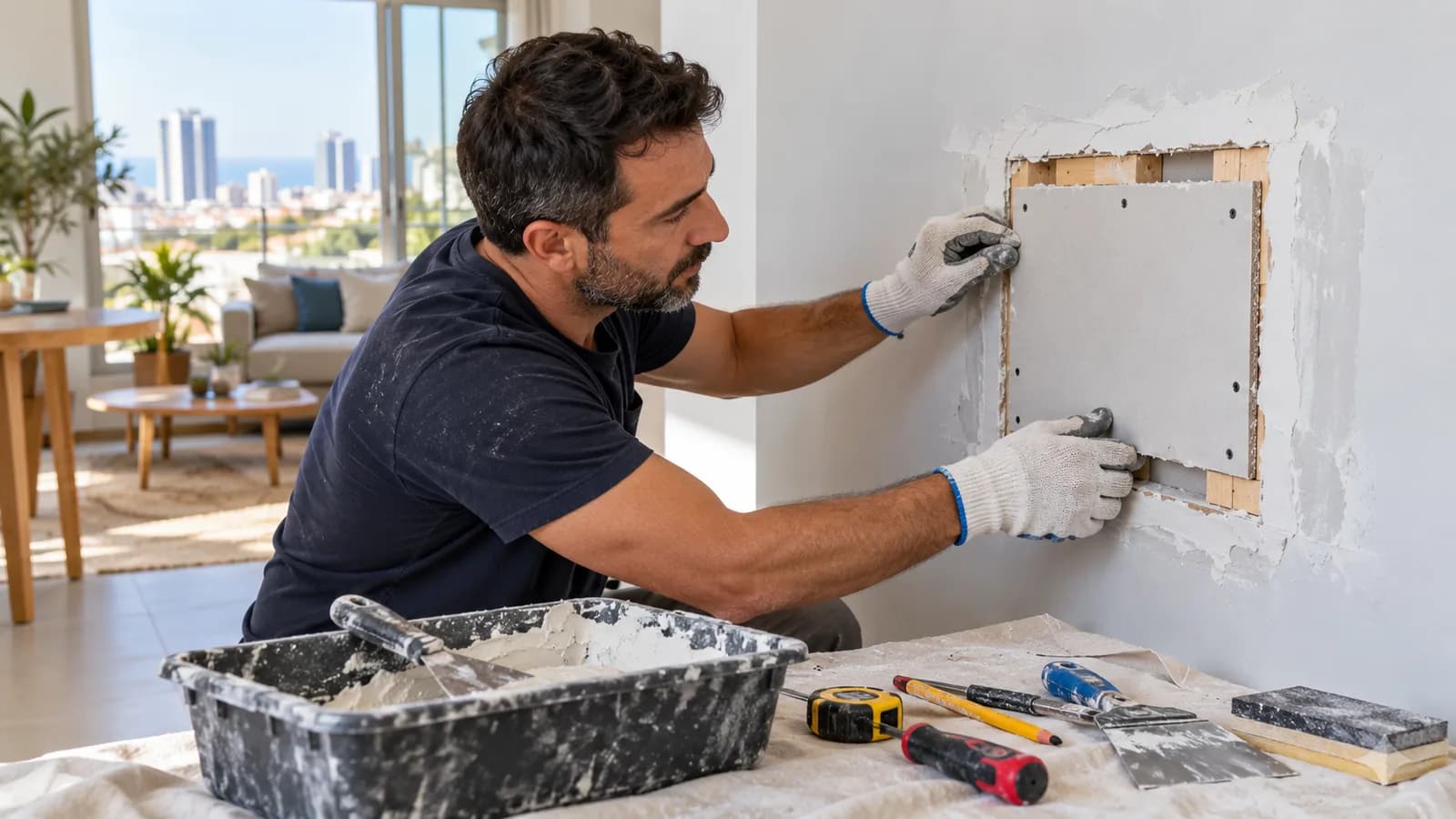
A hole from a door handle, failed anchor or moving furniture can usually be repaired without replacing an entire partition. The right method depends on more than diameter: the board edge must be sound, the cavity dry, concealed wiring understood and any acoustic or fire function retained. A small surface dent, a hand-sized opening and a large break between studs need different support and finishing. This guide gives an Israeli apartment owner a practical way to assess damage, prepare photographs for a quotation and understand what the repair price should cover. Do not decide the state of hidden wiring, a leak or the framing's strength simply by looking into the hole; those call for the relevant trade's inspection.
1. Check for hidden services first
Inspect the damage without putting a hand or tool into the cavity. Is there an outlet, switch, light, pipe, air-conditioning route or damp mark nearby? If a cable is visible, there is a burning smell or water is entering, stop the patching plan and call the appropriate specialist. A hole in gypsum board is often not an emergency, but filling one beside unknown wiring can be dangerous. Photograph its position relative to the floor and nearest corner so a repairer can identify it on a wider view. In a wet area, establish why the board became soft before applying any compound.
2. Classify the damage by construction, not one measurement
A shallow dent with intact facing paper and a rigid board is different from a through-hole. A tiny fixing mark may need local filling and primer; a through-hole cannot be reliably “filled” by pushing compound into empty space. A larger opening usually requires a matching board patch fixed to suitable backing, followed by joint treatment. If a wide area, stud or load-bearing backing has been damaged, replacing a larger portion up to stable members may be more sensible. Dimensions help a quotation, but the condition of the surrounding board, edges and frame matters more than a single diameter.
3. Find out what caused the impact
If a door handle made the hole, plan a doorstop or change the opening path before repair. If the board broke under a wall cabinet or television, inspect the fixing and load path: a cosmetic patch is not a new structural backing. A crack and hole without a clear impact call for a moisture or movement assessment. If removing an old fixing created a small chip, do not enlarge it without need. Ask the repairer to describe the cause separately from the surface finish. An immaculate patch will not survive a repeat impact or an unsupported load any better than the original sheet.
4. What a properly supported patch involves
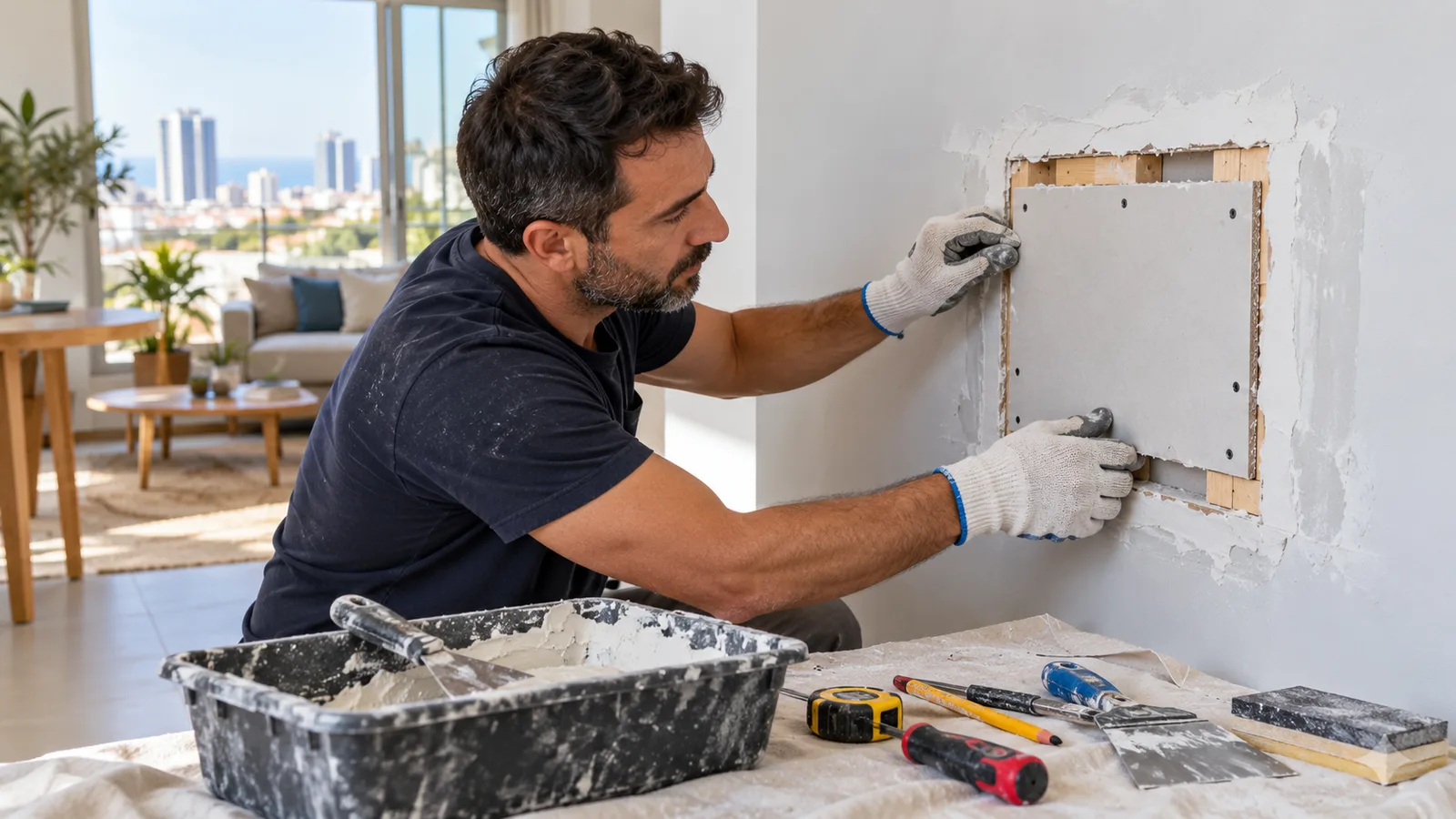
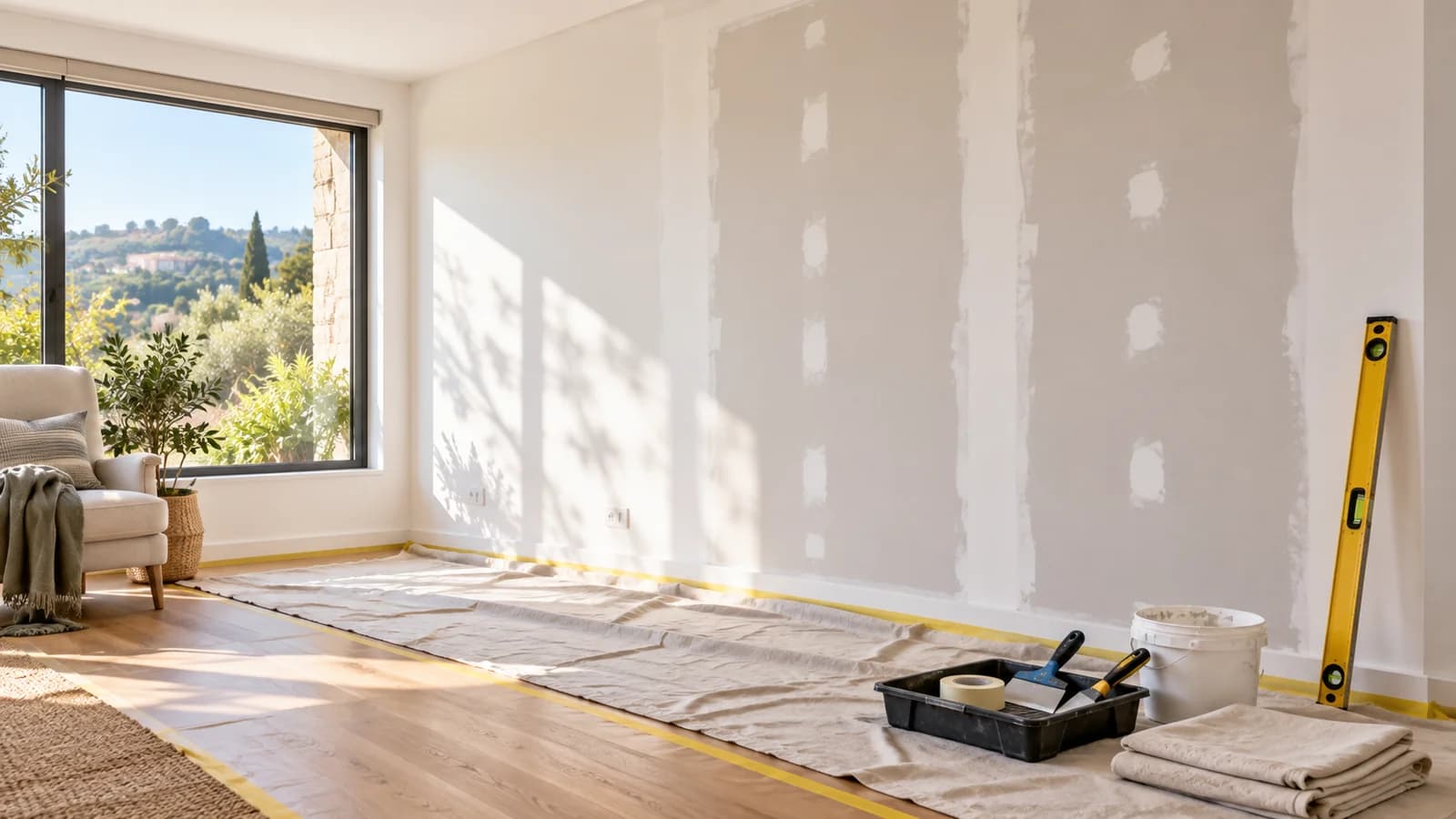
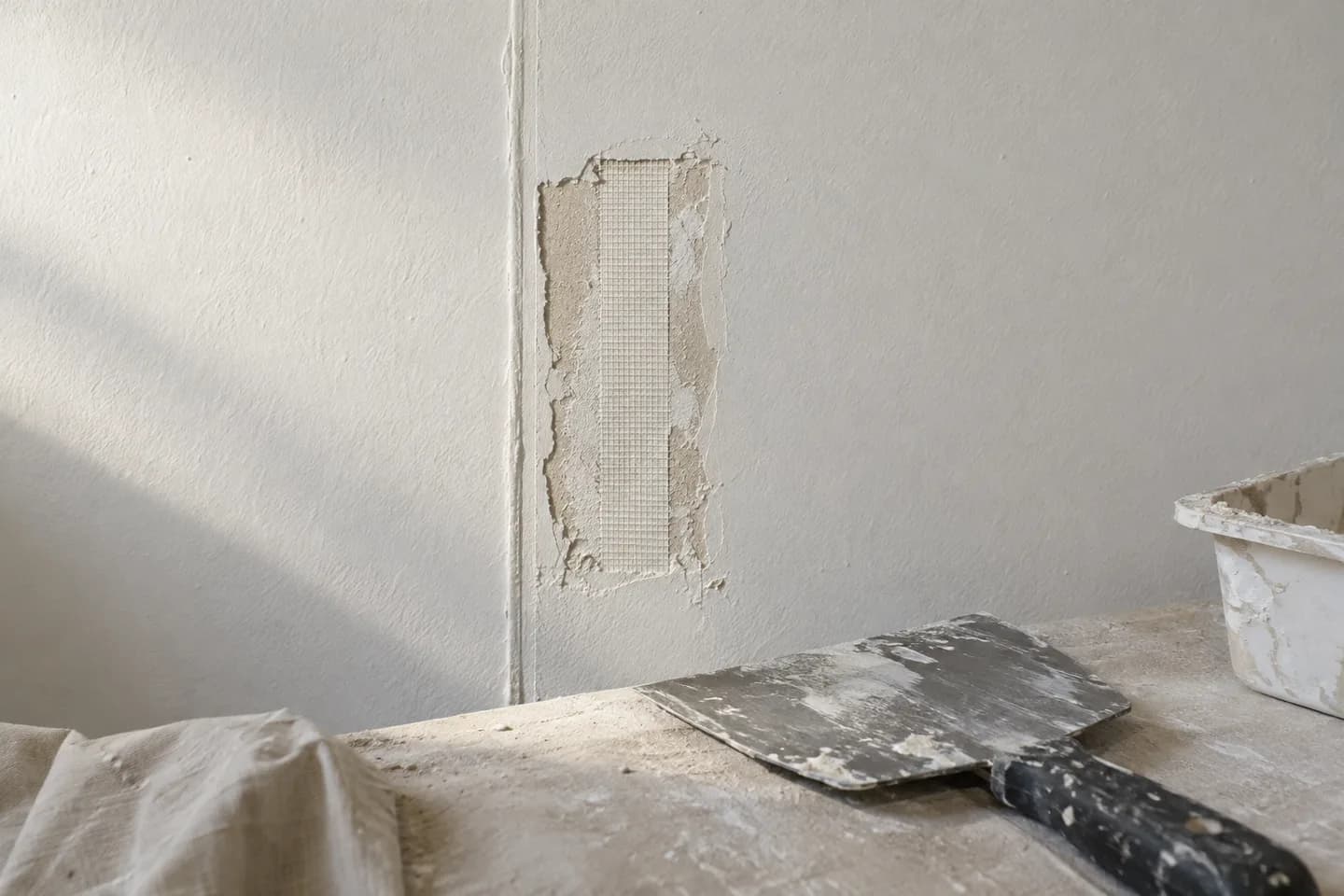
For a through-hole, the repairer removes loose edges, prepares a regular opening, checks the cavity and adds backing when required. A compatible piece of gypsum board is cut to fit and secured, its joints reinforced, compound applied in suitable layers and the dry surface levelled. The illustrated Gypsum Association GA-225 repair bulletin shows this sequence. Exact board, tape and fastener choices depend on the existing wall. Do not accept a patch hanging from torn facing paper, or a deep opening filled entirely with a thick mass of joint compound as a substitute for support.
5. Decide between a small DIY job and a tradesperson
A clean, small defect in a dry ordinary partition, away from services and loads, may be manageable at home if you follow material instructions, control dust and allow every layer to dry. A large break, ceiling, wet area, acoustically important wall or fire-related assembly needs professional assessment. The same applies beneath a shelf or television. Do not open electrical equipment or dismantle unfamiliar framing yourself. If the sheet moves beyond the visible hole after an impact, the support may need work as well. Deciding the scope correctly before finishing is less expensive than reopening a polished but unstable patch.
6. Preserve what the wall originally did
A partition may contain two board layers, cavity filling, sealed acoustic junctions or special system properties. A thin patch over the visible hole does not automatically recreate the original assembly. Ask which layers are damaged, what lies in the cavity and how continuity will be restored. In a wall separating noisy rooms, an open gap can undermine the sound result even when the paint looks flawless. The soundproofing decision guide explains weak transmission paths. For a fire-rated system or service shaft, the repairer should follow its design requirements rather than a general household patch tutorial.
7. Plan primer and paint as part of the job
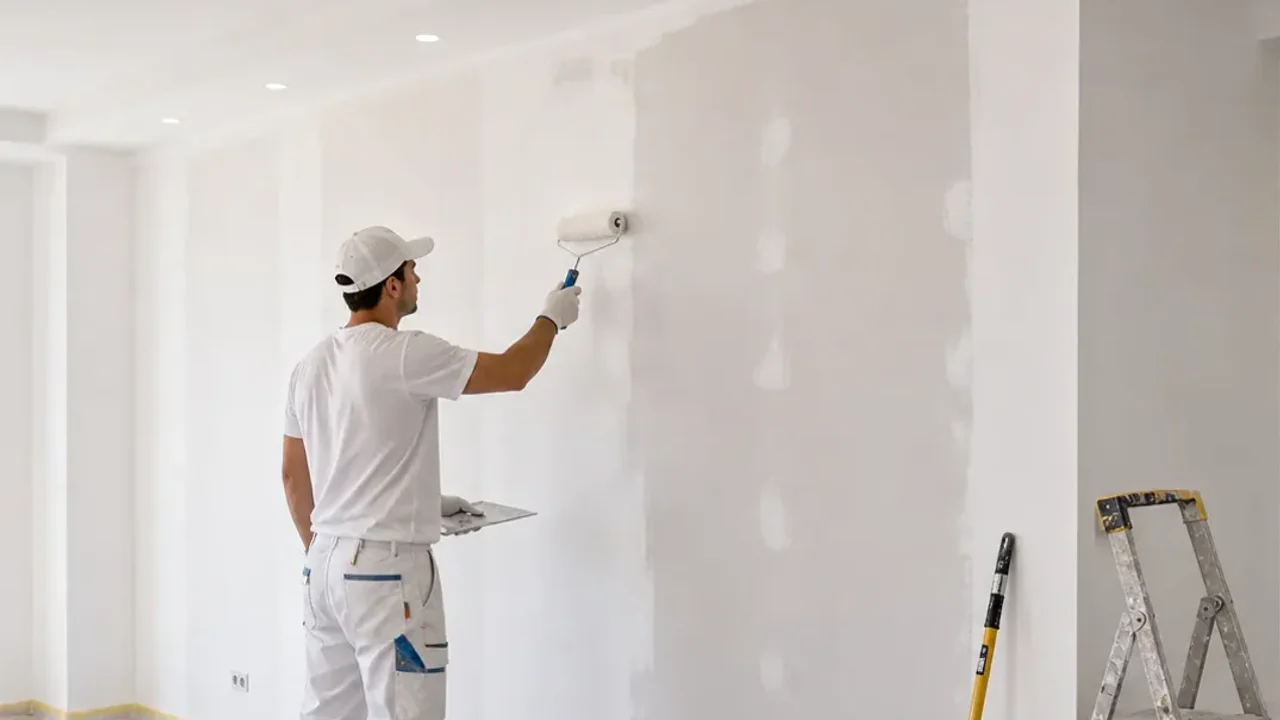
New compound and an older painted wall absorb paint differently. Without primer, the patch may show as a dull area even if perfectly flat. Once the compound dries, the worker sands, removes dust, primes and agrees on how much surface will be painted. An older colour may have faded, making an invisible local match difficult, particularly in side lighting. Painting to the nearest visual break or coating the entire wall are different scopes. Ask whether “repair the hole” means a sound patch only, a surface ready for paint, or a finished painted wall. That distinction explains many unexpected quotations.
8. Calculate cost without inventing a hole tariff
On 18 October 2026 the NikoGips catalog has no universal price “per hole.” Its ₪108–264 per linear metre item covers crack repair and local finishing, which is a different job and unit; do not insert it into a patch calculation. A separate small-room refresh item is ₪2,880–7,440 per room if much broader repainting and preparation are needed, but that is not the price of one hole either. Request lines for call-out and protection, opening and backing, board, tape and compound, drying, primer, agreed paint extent, cleanup and VAT treatment. On a small job, organising visits and drying time may matter more than the hole's area.
9. Compare three common situations
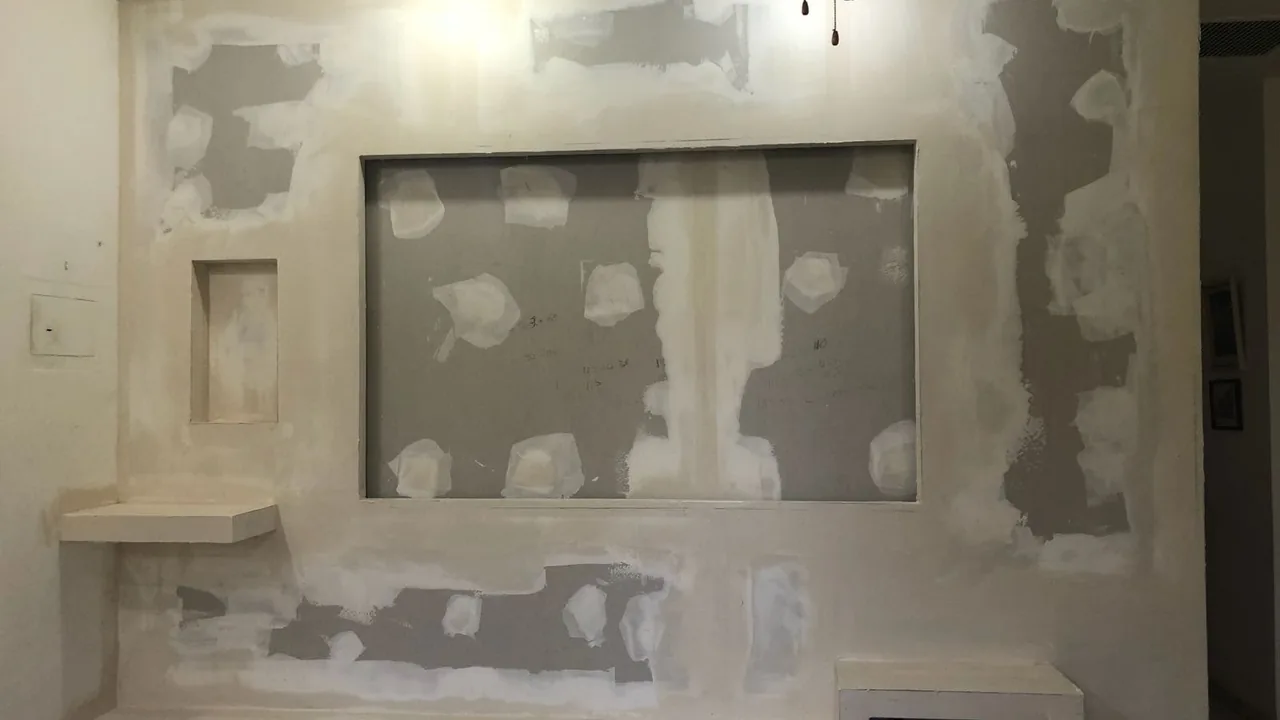
Situation A: a dry screw mark with intact facing paper, suitable filler and touch-up finish. Situation B: a door handle has pierced the board between studs, requiring a backed patch, joint finish, agreed paint and a doorstop. Situation C: a break behind a television where the support for the bracket may also be damaged. Before concealing C, inspect the backing and fixing scheme. The TV mounting guide explains why a smooth repair is not a structural mounting plan. A photograph of a similar job helps communication, but its price cannot be copied without checking your substrate and finish.
10. Send a useful photo set for an estimate
Take a view of the full wall, a close-up beside a ruler, an oblique view showing depth, and photographs of nearby outlets, doors or mounted items. State the opening's width and height, whether its edge feels soft or wet, what paint or covering is on the wall and whether you want paint taken to a corner. Add any previous framing photographs. The quote photo checklist reduces follow-up questions. Include the address and access conditions: a high wall, blocked furniture or narrow visit window changes the work. A preliminary photo estimate remains subject to what the concealed area reveals.
11. Check the result and prevent another hole
After full drying, check that the patch does not flex, the joint stays closed and the finish matches the agreed viewing conditions. Confirm outlets and the door still function. Avoid pressing on fresh compound before its stated curing time. Keep a photograph of the backing before it was covered. If a mounted load caused the damage, separately verify its new fixing; level paint is not proof of strength. If a door handle caused it, install the stop. A returning crack or damp mark calls for another look at movement or water. The handover checklist helps record a precise concern.
Questions
Can a hole be repaired without replacing the wall?
Usually, if the frame and surrounding board are stable; the method depends on size and wall function.
Can I fill a through-hole with compound alone?
A larger through-hole needs a supported board patch and finished joints.
Does a patch need backing?
Often when the opening is between studs; the repairer assesses the actual span.
What if I see a cable?
Stop work and call the appropriate electrical professional.
Can a wet board be patched?
First stop the water and assess whether the board is repairable.
What does one hole cost?
There is no fixed site tariff; request a quote for backing, board, finish, paint and visits.
Why is the painted patch visible?
Absorption, texture or old colour may differ; primer and paint extent matter.
Can a patched area support a TV?
Not automatically; wall-mounted loads need verified support.
Can I repair it myself?
Only a simple dry defect away from services, loads and special wall requirements.
Which photos help a quotation?
A full view, opening with ruler, side view and nearby services or mounted objects.
Relevant services
Guides and practical notes

Message Nikolai on WhatsApp with photos and dimensions, or call him to discuss the next step and what is needed for an estimate.