
Painting dark walls a light colour in Caesarea: coverage, preparation and a consistent finish
A pale coat over a dark wall can reveal patchiness for different reasons. Plan a test area, substrate preparation and the complete painted surface.
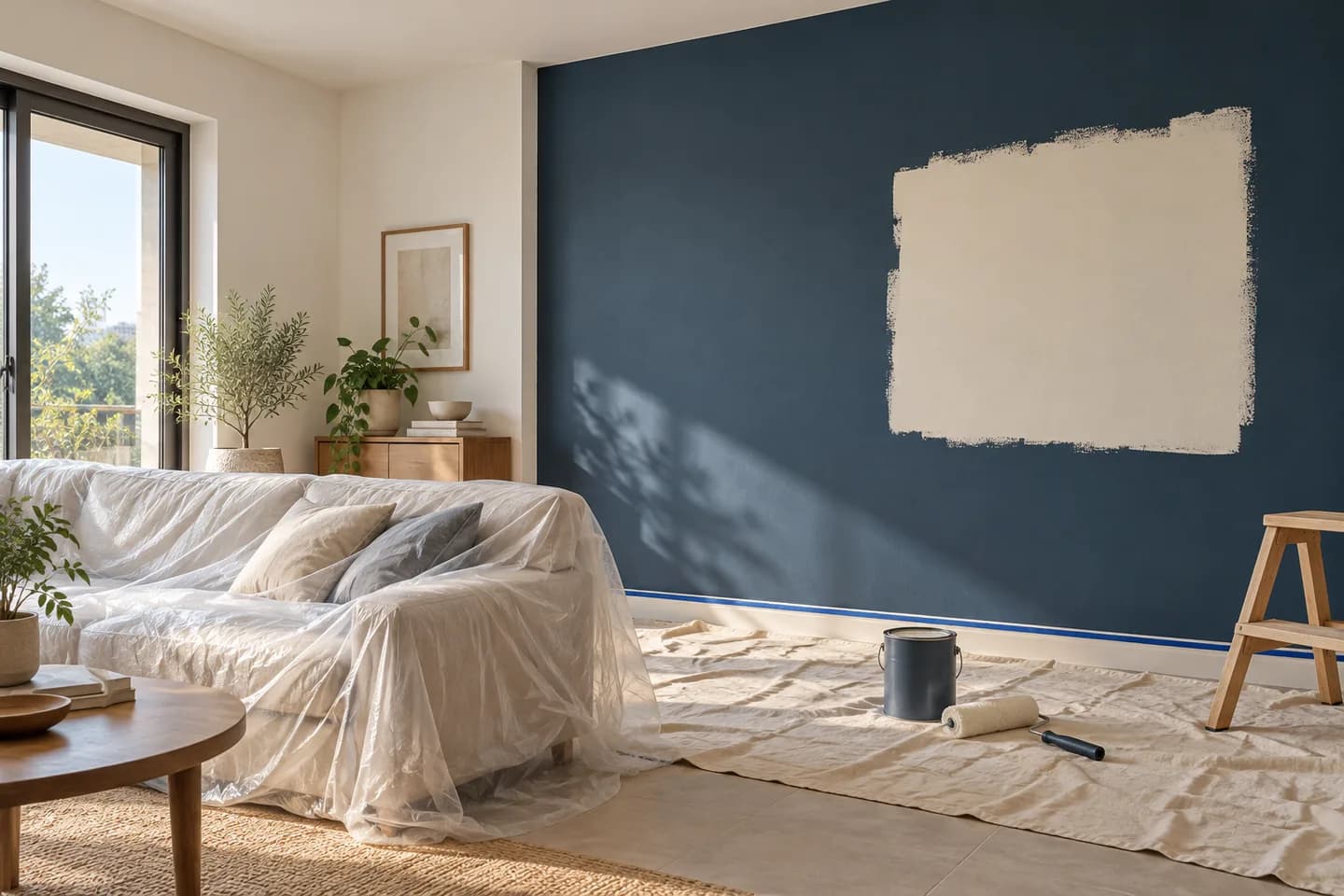
A change from deep blue, charcoal or another saturated wall colour to a light finish looks simple on a colour card. On the actual wall, the existing coating, repairs and lighting also affect the result. For a repaint in Caesarea, define which walls change and what remains around them before discussing a fixed number of coats. This guide helps separate colour coverage from an unstable surface and from visible repairs. It gives a practical way to agree a sample, compare offers and inspect the completed room without assuming that every colour change needs a full renovation.
1. Separate the old colour from the condition of the coating
A sound dark coating and a flaking light coating present different preparation tasks. Record peeling, powdering, greasy marks, cracks and old filled areas independently of colour. Adding more finish paint does not resolve every underlying defect. Ask the installer to assess the surface before choosing the preparation sequence. The wall painting service can then be described around the actual condition. If the only problem is a colour the client no longer wants, do not automatically include removal of every existing layer or complete skim coating without an identified reason.
2. Choose a light colour in the actual room
Bring the proposed colour into the space rather than relying only on a screen or a small card under shop lighting. Look at it near retained flooring, curtains and furniture, during the times the room is normally used. A colour that reads neutral in one setting may look warmer or cooler in another. Record the product reference, colour and sheen after approval. Caesarea is the service location, not a reason to assign one paint system to every home. The room's actual conditions and retained materials provide the useful information for this choice.
3. Agree a representative test area
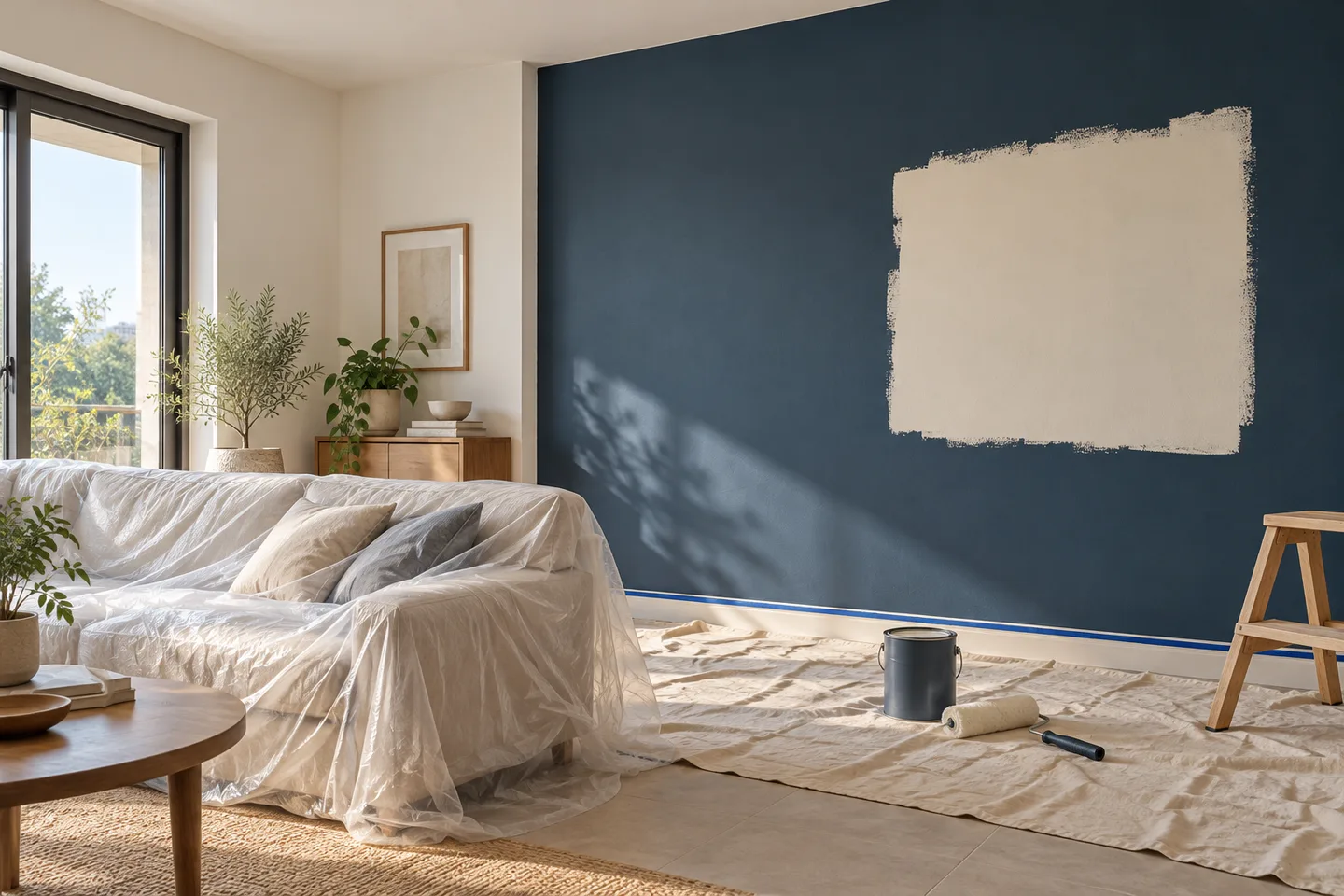
A useful sample should show the proposed preparation and finish over the real dark surface. A small colour swatch on a separate white card answers a different question. Agree where the sample goes, how it will later be integrated into the complete wall and when it will be reviewed after drying. Include a repaired area if contrasting repair texture is a concern. The sample is a planning stage whose cost and purpose belong in the quotation. It should not be treated as a guarantee that every hidden condition elsewhere on the wall has already been identified.
4. Use primer for a defined purpose
Ask what the proposed primer is intended to do: prepare an absorbent repair, address adhesion in a specified system or support the selected colour change. These are not interchangeable descriptions. Dulux's dark-colour guidance notes that covering a strong existing shade can need additional work before the chosen colour. It does not establish one universal product or coat count for Israeli walls. Follow the selected coating manufacturer's instructions, and keep the actual system in the proposal rather than the vague instruction to apply any white layer.
| Wall condition | Decision | Agreed result |
|---|---|---|
| Sound dark coating | Sample and compatible coating sequence | Uniform new colour |
| Local filled areas | Preparation and full-plane paint boundary | Consistent repair and finish |
| Unstable old coating | Address the substrate first | Sound base before decoration |
5. Decide whether filling or a wider skim is needed
Colour coverage and surface flatness are separate results. A dark wall can be flat, and a white wall can show every old patch under side light. Map damaged spots and compare a local repair with preparation of the complete plane only where the condition and desired finish justify it. The full-wall skim service should have a named surface boundary. Use the table to separate a sound wall that changes colour from a wall whose finish also needs rebuilding. This keeps the estimate proportionate to the actual task.
6. Avoid promising the result from coat count alone
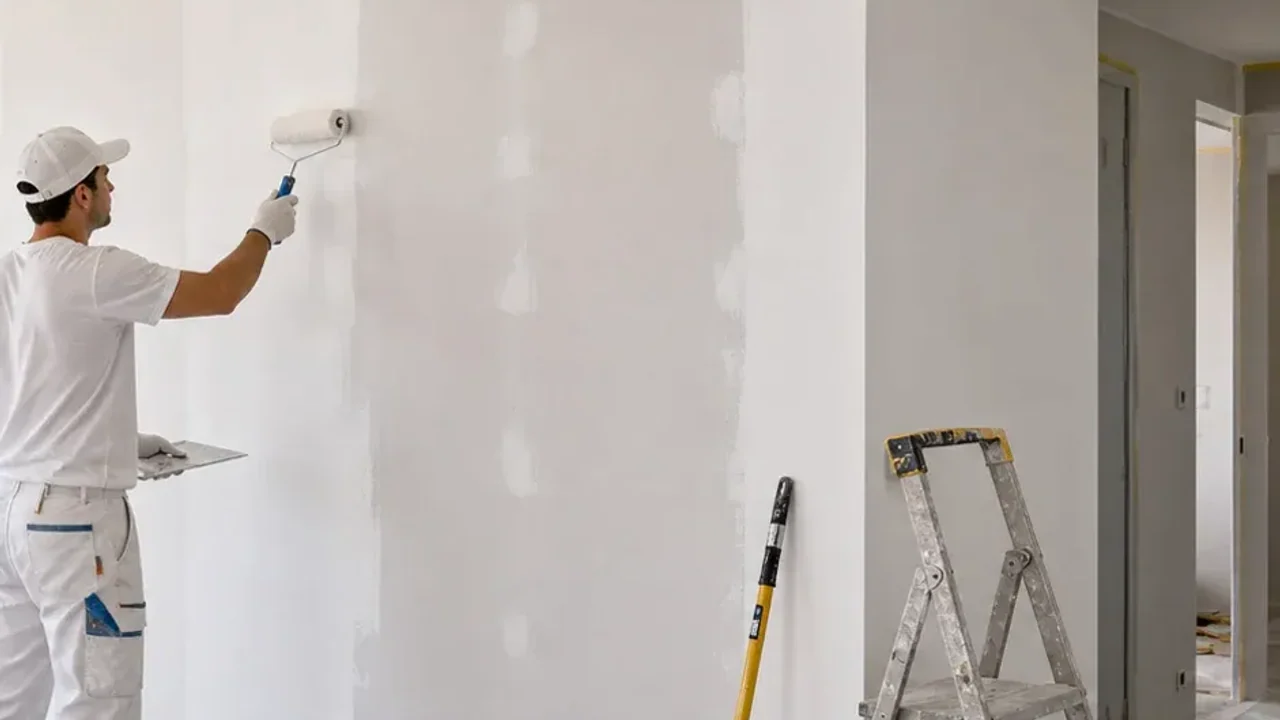
Two proposals that both say two coats can still describe different products, preparation and coverage. Ask for the selected finish and the intended uniform appearance, with a process for reviewing the sample if the old colour remains visible. Additional work should be agreed before it is carried out, with the reason explained. Do not make a universal claim that a dark wall always needs the same number of layers. The condition, old shade, new colour and chosen paint all need to be considered together. A very thick application is not a substitute for following product instructions.
7. Set the boundary at a complete surface
Identify the wall corners, reveals and any adjoining ceiling or joinery that are included. If the order concerns only an accent wall, state that the other walls remain unchanged. If old patches are repaired, discuss whether the complete plane will be painted to achieve the agreed appearance. Local retouching and a full wall repaint should not be mixed in one ambiguous item. For rooms with prominent side light, our finish inspection guide helps explain why the viewing conditions should be agreed before the final coat.
8. Plan furniture and protection before the first stage
List what can be moved and what stays: sofa, built-in storage, curtains, sockets and floor coverings. Agree who moves fragile belongings and when the installer receives a clear working area. Preparation of a wall next to retained joinery can take a different route from the same area in an empty room. This is part of the scope, not a neighbourhood surcharge. Include protection and the agreed restoration of the work area in the quote. Do not present the painting team as providing a separate cleaning or electrical installation service that has not been offered.
9. Coordinate repairs and painting in the right sequence
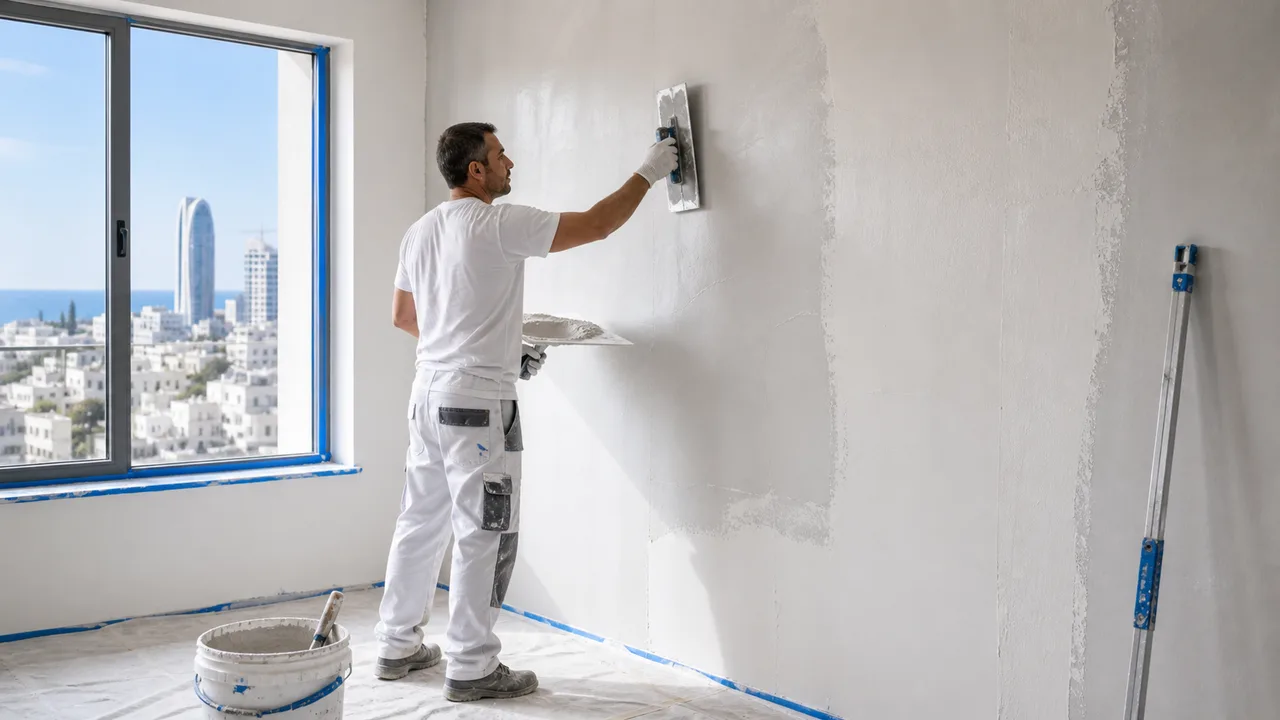
Confirm that any related wall work is complete before the final colour is applied. If a cabinet, cable route or curtain fixing is still to change, mark it now so a fresh wall is not immediately opened again. Where a repair has its own drying or curing requirements, plan the schedule around the actual product and room conditions. A fixed completion promise from a photograph alone leaves these dependencies unresolved. The broader skim and paint service can combine agreed preparation and finishing while preserving the specific boundaries of each part.
10. Compare quotes by surface and finish
Give the same list of wall dimensions, old condition, colour change, sample requirements and retained items to each contractor. Separate local repairs, wider preparation, primer, finish painting and protection. Check the current price catalogue rather than copying an old article's example. The apartment's floor area does not describe all painted wall surfaces. Ask how any extra preparation discovered during work will be documented and approved. A clear proposal describes what will be ready at the end and what still belongs to another agreed stage, without automatically enlarging the job.
11. Inspect after drying under agreed lighting
Review colour coverage, repaired areas and surface consistency once the specified drying stage permits inspection. Look under the agreed everyday lighting and from normal positions in the room. Distinguish a remaining dark show-through from a repair edge or a different sheen; these observations guide the right correction. Keep the final product and colour references for future maintenance, while understanding that later retouching may still differ from an aged wall. Send Nikolai the Caesarea address, room overview, wall dimensions, close photographs of defects and the intended light colour to start a focused discussion.
Questions
Does dark paint always require full skim coating?
No. Skim preparation addresses surface condition and the agreed finish, not the colour alone.
Can you guarantee two coats from a photograph?
A sample and the chosen coating system are more informative than a universal coat count.
Is any white primer suitable?
The product must be appropriate for the substrate and selected paint system. Its purpose should be specified.
Must the other walls be repainted?
Only if they are included in the agreed surface list. One accent wall can be a separate scope.
When should the colour be accepted?
After the appropriate drying stage, under the lighting and viewing conditions agreed for the room.
Relevant services
Guides and practical notes
Message Nikolai on WhatsApp with photos and dimensions, or call him to discuss the next step and what is needed for an estimate.